Choosing Gold Mica Powder is not simply a matter of selecting the brightest jar. The right material must suit your product, production method, and customer expectations. A rich champagne tone may look beautiful in a sample bag but appear dull after mixing into soap, resin, paint, or cosmetics. Particle size, surface treatment, purity, color consistency, and compatibility with the formula all influence the final result.
“Appearance is only the beginning; performance must be measured in the finished product,” says cosmetic formulation expert Perry Romanowski. This practical view is valuable because Gold Mica Powder can behave differently across applications. A fine grade may create a smooth satin sheen, while larger flakes can produce stronger sparkle and visible reflection. Neither option is automatically better. It depends on the effect you want.
Ask suppliers for technical data, batch information, safety documentation, and application recommendations. Check whether the powder is suitable for skin contact, artistic materials, industrial coatings, or craft products. Do not assume that “cosmetic grade” means it fits every formula. Small testing matters. Mix a measured amount into your actual base, then inspect the color under daylight and warm indoor lighting. Let the product rest, too.
A sample can be misleading.
Consider settling, clumping, migration, and odor. These details are easy to overlook. They can also damage customer trust. Some choices will remain imperfect, especially when cost, brilliance, and stability compete. That is why selecting Gold Mica Powder should be a documented, test-driven decision rather than an impulse based on shine alone.

Before choosing gold mica powder, define the product’s purpose. A soap needs stable sparkle and low color migration. A pressed powder needs fine particles, smooth slip, and consistent brightness. A resin craft may accept larger flakes for stronger flash. The finish comes later. Start with the use case.
A 2024 Grand View Research assessment projects steady growth in the global mica market through 2030. This suggests wider material demand, but volume does not guarantee suitability. Ask for particle-size distribution, brightness data, coating composition, and heavy-metal test results. For cosmetics, request an ingredient specification, batch certificate, and microbiological documentation. For decorative goods, check heat stability and dispersion in the chosen base. Test it yourself.
Small samples reveal more than sales language. Mix the powder into your actual formula, then inspect it under daylight and warm indoor light. Rub the dried surface. Does the gold dull, shed, or turn muddy? I once treated “high sparkle” as a specification. It was not. The particle size was too coarse for a smooth finish. The 2024 color cosmetics market analysis by Fortune Business Insights also highlights continued demand for premium visual effects, yet appearance must remain repeatable across batches. Record the loading rate, mixing time, settling behavior, and final color. A beautiful sample can still fail production.
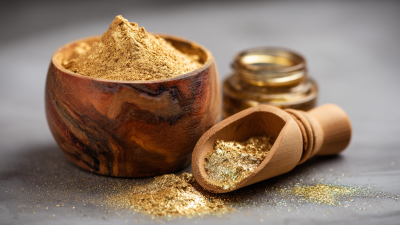
How to Choose Gold Mica Powder for Your Products?
Gold mica powder can change a product’s character within seconds. Pale champagne shades create a soft, modern glow. Yellow gold looks warmer and more traditional. Antique gold adds depth, especially in soaps, candles, coatings, and decorative finishes. I have found that shade names can be inconsistent between suppliers. Always inspect a physical sample under daylight and warm indoor lighting.
Particle size controls both appearance and handling. Fine particles create a smooth shimmer with minimal texture. Medium particles offer stronger sparkle and better visual movement. Coarse particles produce visible flashes, but they may settle or feel rough. The final effect also depends on the base color, binder, and application thickness. A thin layer may look delicate, while a heavier layer can appear cloudy or overly metallic. That difference is easy to miss during initial testing.
Tips: Compare samples on the actual product surface. Record the powder ratio, mixing time, and curing conditions. Check color after drying, because wet formulas can look darker. Request technical documents, including composition details, recommended use levels, and batch information. Test more than one batch when consistency matters. A shade that looked perfect once may shift later. I sometimes prefer a slightly less dramatic gold because it remains easier to control.
Compare gold shades, particle sizes, and visual effects before selecting a mica grade.
A soft, light-reflective appearance suited to elegant, low-intensity finishes and lighter color bases.
A balanced warm gold that works well when brightness, recognizable gold color, and moderate sparkle are required.
A deeper, warmer appearance that pairs effectively with coarse sparkle or darker product bases.
Fine mica particles generally create smoother coverage and a satin appearance. Medium particles provide a balance between coverage and sparkle, while coarse particles create stronger glitter and visible reflective flashes. Typical particle-size ranges vary by supplier and grade; always confirm the technical data sheet for final formulation work.
Gold mica powder can make a product look warmer, brighter, and more premium. However, color alone does not prove quality. Inspect the powder under clear light. It should show an even golden tone, clean sparkle, and minimal dark particles. A sample can look perfect and still fail during production.
Ask for batch details, technical data, and safety documentation before purchasing. Check the mica’s particle size, purity, moisture level, and recommended application. Cosmetic products need suitable cosmetic-grade material, while soaps, coatings, plastics, and crafts may require different specifications. Avoid using one grade everywhere. That shortcut can create safety and performance problems.
Test a small batch first. Mix the powder into your actual base, not only water. Observe dispersion, settling, clumping, color change, and surface feel after drying. For creams or oils, check whether the mica separates overnight. For coatings, rub the finished surface and inspect pigment transfer. Heat and light exposure also matter. Gold effects may weaken over time. I have overlooked this step before, and the final appearance changed more than expected. Keep the test records, including formula, mixing speed, and storage conditions. Also handle fine powder carefully, using suitable ventilation and protective equipment. Product compatibility is not a guess; it needs evidence from repeated trials.
Choosing gold mica powder starts with the product’s real use, not its color card.
In cosmetics, test skin feel, dispersion, and sparkle under daylight and warm indoor lighting. For soap, examine color bleeding, settling, and changes after curing. In coatings, check wetting, hiding power, and adhesion on the intended surface. A powder that looks brilliant in a jar may appear dull after mixing. Particle size matters. Fine grades create smoother sheen, while larger flakes produce stronger sparkle but may feel gritty.
Packaging should protect the powder from moisture, contamination, and repeated handling. Use a tightly sealed container with an inner liner in humid environments. Clear containers support visual checks, but light exposure may affect long-term color evaluation. Check the closure after opening and closing it repeatedly. Small details matter. Record the lot number, test date, and storage conditions. Weigh a sample before and after storage. This simple check can reveal moisture pickup that visual inspection misses.
Shelf stability requires more than a printed date. Store trial samples under normal and stressed conditions, then compare color, odor, flow, and dispersion. Keep records at fixed intervals, such as 30, 60, and 90 days. Watch for clumping near the container wall. It often signals humidity or poor sealing. Do not rely on one successful batch. Raw material variation happens. Define acceptable color shift, particle feel, and moisture levels. Some early tests may seem reassuring, yet they can miss seasonal humidity changes. My own evaluations have sometimes been too optimistic.
When choosing gold mica powder, supplier reliability matters as much as visual appeal. A bright sample may hide uneven coating, poor dispersion, or inconsistent color between batches. Ask for technical data before discussing price. Particle size, mica source, pigment concentration, heat resistance, and recommended applications should be clearly documented. Request a current certificate of analysis and safety data sheet. The documents should match the exact product code and batch.
Always test physical samples before purchase. Do not rely on photographs. Mix the powder into your real resin, paint, plastic, or cosmetic base. Check the gold tone under daylight and indoor lighting. Observe settling, clumping, coverage, and surface shine. Test a small finished piece after heating, curing, rubbing, or exposure to moisture. These steps reveal problems that a dry powder sample cannot show. Small details matter.
Speak directly with the supplier’s technical team. Reliable suppliers can explain batch control, packaging protection, storage conditions, and replacement procedures. Ask how they handle shade differences between shipments. A written answer is useful. Vague promises are not. I have learned that a low price can become expensive after rejected production. Still, sampling is not perfect. One approved sample cannot guarantee every future batch. Keep a retained sample, record the lot number, and request pre-shipment confirmation for larger orders. Allow extra time for testing. Rushing this stage often creates avoidable rework.
| Evaluation Dimension | What to Confirm with the Supplier | Sample Check or Test | Practical Reference Data | Purchase Decision Signal |
|---|---|---|---|---|
| Product Composition | Confirm whether the material is natural mica, synthetic mica, or mica coated with a colorant such as iron oxide or titanium dioxide. | Compare the technical data sheet, safety data sheet, ingredient declaration, and sample appearance. | The composition should be clearly stated; “gold” is a visual color description and does not by itself identify the chemical composition. | Prefer a supplier that provides a consistent composition description and supporting documents. |
| Particle Size Distribution | Request D10, D50, D90 values or a sieve analysis for the exact grade being quoted. | Disperse the sample in the intended medium and check texture, settling, coverage, and visible grit. | Common decorative grades may range from fine particles below 50 µm to coarse effect grades above 100 µm; the suitable range depends on the application. | Choose fine grades for smooth coatings and cosmetics, and coarser grades when stronger sparkle is required. |
| Color and Gold Tone | Confirm the color standard, batch tolerance, undertone, brightness, and whether the shade changes in different binders. | Apply equal amounts to the same test base, using identical mixing and drying conditions. Compare in daylight and under indoor lighting. | Color perception varies with particle size, coating system, concentration, film thickness, lighting, and viewing angle. | Approve only a retained reference sample and a written color tolerance for future batches. |
| Luster and Reflectivity | Ask for gloss, sparkle, hiding power, and viewing-angle information for the intended product format. | Prepare drawdowns or molded samples at the intended dosage and inspect both direct reflection and diffuse appearance. | Higher aspect-ratio flakes generally create stronger visual reflection, while smaller particles usually provide a smoother satin effect. | Select the grade that matches the required balance of sparkle, smoothness, and coverage. |
| Dispersion Performance | Confirm recommended mixing order, compatible solvents or binders, maximum shear conditions, and whether surface treatment is present. | Mix at production-like speed and time. Check for floating, streaking, agglomeration, sedimentation, and color non-uniformity. | A stable dispersion should remain visually uniform after the defined mixing and short-term storage test. | Reject samples that require undocumented processing changes or show persistent clusters. |
| Moisture and Flowability | Request moisture content, packing method, storage conditions, and information about caking during transport. | Inspect the powder for lumps and measure moisture using an appropriate laboratory method if moisture is critical to processing. | Dry, free-flowing powder is generally easier to dose and disperse; the acceptable moisture limit must be defined for the formulation. | Prefer sealed, moisture-resistant packaging and a documented storage recommendation. |
| Purity and Contaminants | Request heavy-metal testing, microbiological data where relevant, and limits for insoluble matter or foreign particles. | Review a recent certificate of analysis and use independent testing when the product is intended for skin contact, toys, or regulated applications. | Acceptance limits depend on the final use and applicable regulations; a generic “non-toxic” statement is not a substitute for test data. | Buy only after the supplier provides traceable, lot-specific quality information. |
| Regulatory Suitability | Confirm the intended application, ingredient status, labeling requirements, and restrictions in the destination market. | Match the product documentation with the final product category, such as coatings, crafts, cosmetics, plastics, or printing inks. | A pigment suitable for industrial coatings is not automatically suitable for cosmetic or children’s products. | Require written application suitability before placing a commercial order. |
| Batch Consistency | Ask how batches are identified, tested, retained, and compared with approved standards. | Compare at least two production lots for color, particle size, moisture, dispersion, and visual effect. | Color and effect pigments can vary when particle size, coating thickness, or raw material sources change. | Choose suppliers that maintain retained samples and provide lot-specific certificates. |
| Sample Approval | Confirm sample quantity, sample lot number, preparation instructions, and whether the commercial product will match the approved sample. | Use the sample in a small production trial under real processing conditions before approving the purchase. | A laboratory jar test alone may not reveal pumping, filling, drying, or long-term settling problems. | Do not approve a bulk order until the sample passes both appearance and process-performance checks. |
| Packaging and Shelf Life | Confirm container type, net weight tolerance, batch labeling, manufacturing date, shelf life, and storage temperature and humidity. | Inspect the package for leakage, moisture entry, damaged seals, and readable traceability information. | Powders should normally be stored closed, dry, and away from contamination; exact shelf life is product-specific. | Prefer packaging that protects against humidity and supports first-in, first-out inventory control. |
| Supplier Documentation | Request a technical data sheet, safety data sheet, certificate of analysis, specification sheet, and applicable compliance declarations. | Check that document names, product codes, revision dates, test methods, and batch numbers are consistent. | Reliable documentation should be product-specific rather than a generic document covering an entire product range. | Treat missing, contradictory, or undated documents as a purchasing risk. |
| Commercial Terms | Confirm minimum order quantity, sample policy, lead time, payment terms, delivery conditions, and replacement policy for nonconforming goods. | Compare the total landed cost, including packaging, freight, testing, import charges, and potential rework. | The lowest unit price may create higher total costs if the pigment causes poor dispersion, color variation, or production loss. | Select the supplier offering the best combination of verified quality, traceability, service, and total cost. |