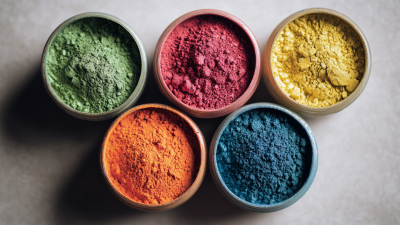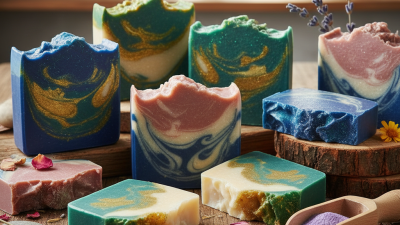
Pigment Powder Mica can look striking in a sample jar, yet appearance alone tells buyers very little. A copper shimmer may appear bright under a showroom lamp and dull in a finished coating. Particle size, mineral grade, surface treatment, and batch consistency all influence the result. Small differences matter.
The U.S. Geological Survey’s 2024 Mineral Commodity Summaries reports on mica production, trade, and uses, offering a dependable starting point for understanding the mineral supply chain. USGS mineral commodity specialist M. K. Shedd’s work helps frame a practical buyer’s rule: “Check documented grade, particle size, and source before comparing price.” That sentence is a guide for this article, not a direct quotation from Shedd. Buyers should request a current technical data sheet and safety data sheet, then compare the stated specifications with a sample tested in their own formula.
Good buying takes patience. Ask whether the powder is natural or synthetic, how its particle-size range is measured, and whether the color stays consistent across batches. Check the packaging, too: a fine powder should arrive sealed, dry, and clearly labeled. These details are easy to overlook when a color looks perfect. I would still question any supplier who offers confident promises but vague specifications. The following seven tips focus on the checks that help buyers choose Pigment Powder Mica with clearer expectations and fewer costly surprises.
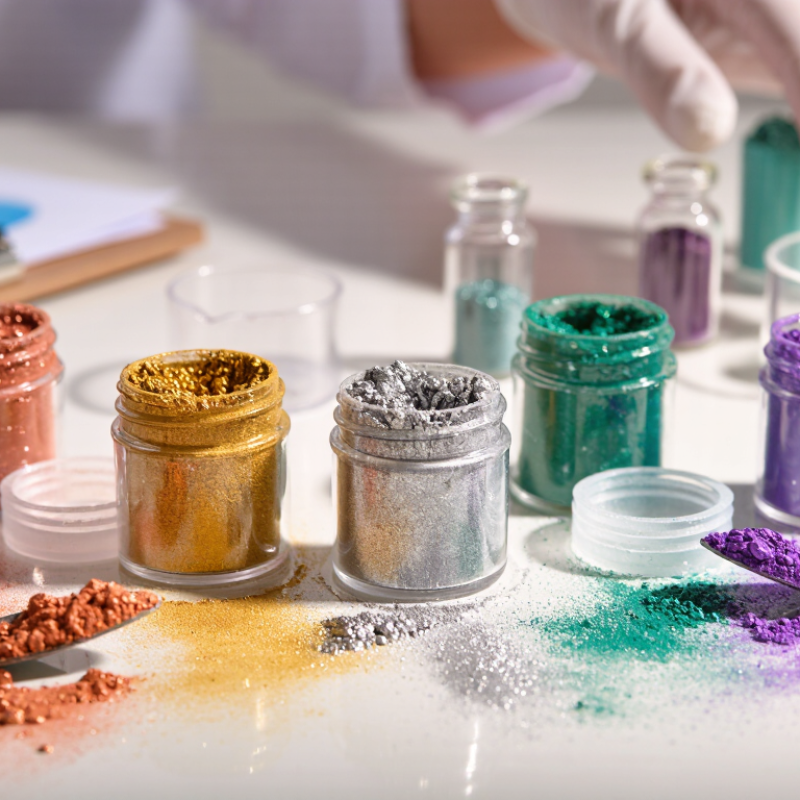
Pigment powder mica is made from fine, reflective mineral flakes, often coated with color-producing oxides. Unlike a flat dye, it catches light and creates a pearly or metallic effect. The result depends on particle size, coating, and the surface beneath it. Subtle shimmer. A pale powder may look brighter on black paper and softer on white.
Mica powders are used in crafts, paints, resin projects, and some soap formulations. In resin, a small pinch can add a satin sheen; too much may settle or obscure fine details. In paper art, a dry brush gives raised edges a quiet sparkle. Cosmetic products require materials specifically assessed for cosmetic use, since craft-grade powder is not automatically suitable for skin. Check the intended application and supplier’s safety information before buying. Color samples can also be misleading on a screen. Testing a little on the actual material is wiser, though it adds one more step. It is easy to expect a vivid color and get mostly shine instead.
Mica minerals are relatively soft, with hardness ranges that vary by mineral type. This chart shows mineral hardness on the Mohs scale—not a rating of pigment quality or finished-product durability. When buying mica powder, also check its intended use, particle size, color, and compatibility with your application, such as crafts, coatings, or cosmetics.
Tip 1: Check the color in daylight. Mica can look warmer under indoor bulbs. Compare a wet sample with a dry sample, because binders may shift the final shade.
Tip 2: Request a batch-specific color card. The 2024 USGS Mineral Commodity Summaries identifies mica as an industrial mineral used in coatings, plastics, and decorative products. Source quality still varies.
Tip 3: Confirm particle size with laser diffraction, following ISO 13320. Finer particles usually create smoother sparkle, while larger flakes produce stronger flash.
Tip 4: Ask for the size distribution, not only an average value. A 20-micron average can hide oversized particles. I have found this easy to miss.
Tip 5: Check purity using a certificate of analysis. Look for mica content, moisture, insoluble residue, and heavy-metal results.
Tip 6: Treat safety documents as essential. USP General Chapter <232> lists oral daily exposure benchmarks of 5 micrograms for lead and 15 micrograms for arsenic. These are useful reference points, not automatic approval for every application.
Tip 7: Verify the material grade and intended use. Cosmetic, craft, and industrial powders may require different testing. Request recent test dates, lot numbers, and methods. A product can appear clean yet lack reliable evidence. Also inspect the container for dust leakage, unclear labeling, or inconsistent color between lots.
7 Tips for Buying Pigment Powder Mica
Choosing the Right Mica Powder for Your Project
Choosing mica powder starts with your project, not the brightest sample. Resin art may need fine, evenly dispersing pigment, while candles and soap require different performance checks. Decide whether you want shimmer, metallic depth, or a soft pearlescent finish. Small tests matter. A teaspoon can reveal settling, clumping, and unexpected color changes.
Check the particle size before buying. Fine mica usually creates a smoother surface, while larger flakes produce stronger sparkle. Mix a small amount into your actual base material, then observe it after curing or drying. Color can surprise you. A powder that looks blue in the container may appear gray in clear resin. I once used too much pigment and lost the translucent effect I wanted.
Reliable product information should include ingredient details, batch consistency, recommended applications, and safety documentation. For skin-contact projects, verify suitable testing and usage guidance instead of relying on attractive photographs. Compare several samples under daylight and indoor light. Packaging quality also matters because moisture can affect loose powder. Keep notes about ratios, mixing time, and final appearance; this makes future purchases more precise, even when the first experiment is imperfect.
When buying pigment powder mica, compare suppliers beyond the quoted kilogram price. USGS Mineral Commodity Summaries 2024 identifies China, Finland, India, Madagascar, and the United States as notable mica sources. This geographic spread can affect lead times, documentation, and batch consistency. Ask for particle-size data, color-index information, safety testing, and a current certificate of analysis. A polished sales sheet is not enough.
Packaging deserves equal attention. Request sealed inner bags, moisture-resistant outer cartons, batch numbers, and tamper evidence. Small jars are convenient, but they can cost more per gram and create extra plastic waste. The OECD reported that only 9% of global plastic waste was recycled in 2019. That figure makes packaging choices worth questioning, even for small orders. Compare net pigment weight, not container size.
Samples reveal problems that spreadsheets miss. Test each sample in your real base, under daylight and warm indoor light. Check sparkle, clumping, coverage, settling, and color shift after drying. Compare delivered cost per usable gram, including freight, duties, and rejected material. I once trusted a low price and ignored a weak sample; the color looked dull in production. My mistake was treating price as evidence of value. A better supplier should explain variation, replace inconsistent batches, and provide traceable production details. Ask for three samples when possible. One sample can mislead.
7 Tips for Buying Pigment Powder Mica
Verifying Storage Requirements and Making a Confident Purchase
Storage instructions deserve the same attention as color and particle size. USGS Mineral Commodity Summaries 2024 reported roughly 130,000 metric tons of mica imports into the United States in 2023. That volume reflects a broad supply chain, not consistent quality. Ask for the lot number, certificate of analysis, recommended humidity, and maximum storage temperature before paying.
Keep unopened mica in its original sealed pouch. Store it in a cool, dry cabinet away from sunlight, steam, oils, and strong odors. A practical reference is ASTM D4332, which uses 23 ± 2°C and 50 ± 5% relative humidity for conditioning packaging materials. This is not a universal mica-storage rule. Treat it as a testing benchmark, then follow the supplier’s SDS and technical sheet.
Inspect the powder before use. It should flow freely, without hard lumps, damp patches, or unusual odor. Check a small sample under bright light; moisture can dull pearlescent effects and create uneven blending. I once treated a resealable bag as truly airtight. It was not. A secondary sealed container would have prevented that mistake. Buy less if your workspace is humid, and record the opening date for every lot. Reliable sellers should answer storage questions clearly, provide traceable documentation, and explain how long the powder remains within specification.
| Tip | What to Verify | Practical Check Before Buying | Why It Matters |
|---|---|---|---|
| 1. Confirm the intended application | Check whether the powder is specified for your use, such as crafts, coatings, soap, cosmetics, or another application. | Request the product’s technical information and confirm that it addresses your intended use. Do not assume that a general craft grade is suitable for cosmetic or food contact use. | Application requirements and applicable rules differ. A “mica” description alone does not establish suitability for every use. |
| 2. Ask for storage instructions | Look for the recommended temperature range, humidity precautions, light exposure guidance, and instructions for keeping the container closed. | Compare the supplier’s written guidance with your storage conditions. If no specific temperature is stated, ask before ordering rather than assuming a universal range. | Storage recommendations can vary by formulation and packaging. Moisture, contamination, or unsuitable temperatures may affect handling or product quality. |
| 3. Check packaging and closure | Verify that the powder is supplied in a clean, securely closed container that protects it from moisture and accidental spills. | Ask about the container material, seal, package size, and whether the product can be resealed after opening. | A suitable closed package helps limit moisture exposure, spills, and cross-contamination during storage and use. |
| 4. Review batch and shelf-life information | Check for a batch or lot number and any stated manufacture date, expiry date, or retest date. | Ask how long the product is expected to remain suitable under the specified storage conditions, and whether the information applies to unopened or opened packaging. | Shelf life is product-specific; do not rely on a universal period when the supplier has not provided one. |
| 5. Compare particle size and appearance | Review available particle-size information, color description, and finish, such as shimmer or luster. | Request a sample or test a small quantity in your actual base material before purchasing a larger amount. | Particle size and the surrounding material can influence appearance, texture, and how evenly the powder disperses. |
| 6. Request relevant safety documents | Ask for the current safety data sheet (SDS) and any technical or regulatory documents relevant to your application. | Review the handling, storage, and personal protective equipment guidance. Follow the product-specific instructions and applicable local requirements. | Fine powders can become airborne during handling. The SDS provides product-specific precautions; avoid creating or inhaling dust. |
| 7. Confirm order and delivery details | Verify the quantity, product description, batch documentation, packaging condition, shipping method, and return or replacement terms. | Keep the order confirmation and inspect the package on arrival. Store it according to the supplied instructions and record the batch number. | Clear order records and prompt inspection make it easier to identify discrepancies or damaged packaging. |