China Top Epoxy Resin Pigment Powder Suppliers?
Epoxy Resin Pigment Powder can transform a clear pour into a deep ocean blue, a soft stone gray, or a metallic finish. Yet color is only part of the buying decision. Particle dispersion, tint strength, heat resistance, and batch consistency affect the cured surface. A vivid sample can still perform poorly if it clumps, fades, or settles in a resin system.
Market context helps, but it needs careful reading. Grand View Research valued the global epoxy resin market at about US$12.9 billion in 2023 and projected a 6.4% compound annual growth rate from 2024 to 2030. That forecast describes epoxy resin broadly, not pigment powder alone. Important distinction. For buyers comparing China-based suppliers, practical evidence matters more than market size: technical data sheets, safety data sheets, color charts, and representative samples. Ask how suppliers control shade variation between batches. Test powder in your own resin, at your usual ratio, and inspect the cured piece under natural and indoor light. Small differences show up.
This guide examines China’s Epoxy Resin Pigment Powder suppliers through product range, documentation, customization, communication, and sample quality. No single supplier suits every project. A maker serving decorative tabletops may not fit precision casting or small craft orders. Published claims can also leave gaps; a clear question about testing methods is often more useful than a polished catalog. The goal is not to declare a universal winner, but to help you shortlist suppliers and verify their claims before placing a larger order.
Understanding Epoxy Resin Pigment Powders and Their Uses
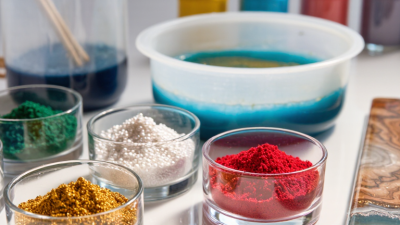
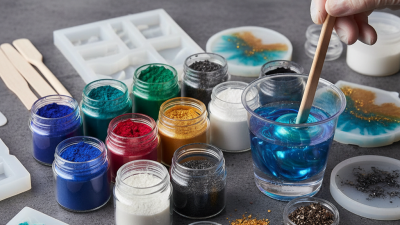
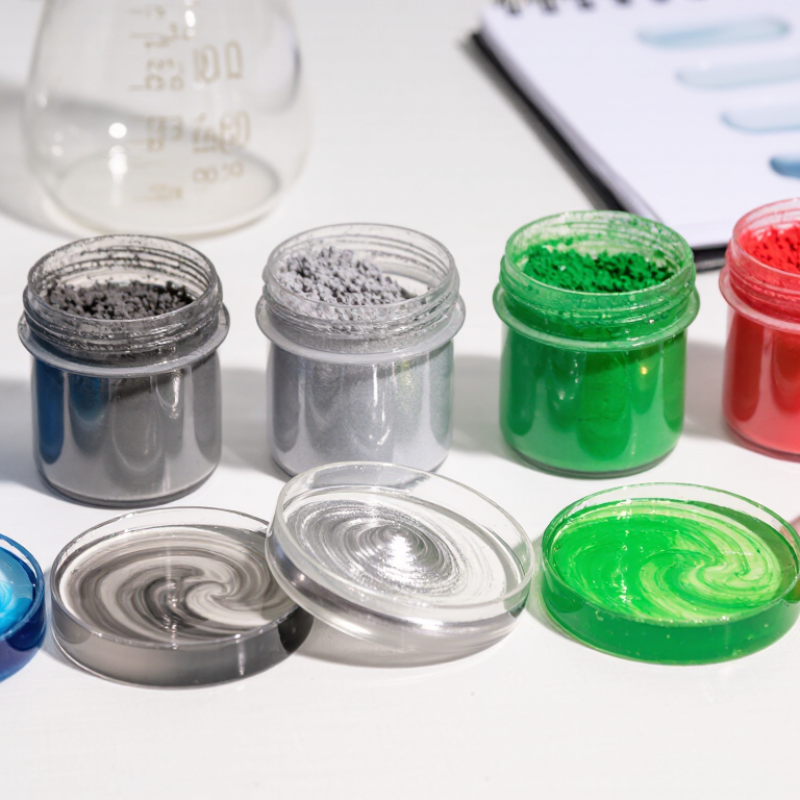
Epoxy resin pigment powders are finely milled colorants added to resin before curing. They can create opaque, metallic, pearlescent, or softly tinted finishes. A small amount can change the result dramatically. Unlike liquid dyes, many powders add color without much carrier liquid, but they can still affect flow and surface appearance.
These pigments are used in river tables, jewelry, coated panels, and decorative casts. A pinch of blue mica can catch light in a shallow tray, while dense black pigment can hide the surface beneath. Results depend on particle size, resin clarity, mixing, and layer thickness. Stir slowly with a flat tool, scraping the cup’s sides and bottom. Clumps can appear in the cured piece. Test small.
When choosing a powder, check its compatibility with the specific epoxy system and review its technical information. Measure consistently, and start with a low loading; too much pigment may affect curing or leave streaks. Wear suitable gloves and avoid breathing airborne dust while handling it. Keep the work area ventilated.
I still find color prediction imperfect: a shade that looks pale in the cup may cure much darker, so a small cured sample is the better guide.
How to Assess China-Based Pigment Powder Suppliers
China Top Epoxy Resin Pigment Powder Suppliers?
How to Assess China-Based Pigment Powder Suppliers
Supplier assessment should begin with measurable product data, not a polished catalog. Grand View Research’s Epoxy Resin Market Size, Share & Trends Analysis Report estimated the global epoxy resin market at USD 13.7 billion in 2023, with projected annual growth of 6.3% from 2024 to 2030. This signals a growing market, but it does not prove that any supplier can deliver consistent pigment quality. Ask for batch-specific certificates of analysis, particle-size distribution, color strength, heat stability, and dispersion results. Compare samples in your own resin system; a bright powder can still cure unevenly or shift color.
Check whether the supplier can trace samples to production batches and explain its testing methods. Request results from at least two batches, then compare them under the same mixing and curing conditions. Review packaging details too: sealed moisture-resistant bags matter when powder travels through humid conditions. No spreadsheet catches everything. A brief video audit or factory visit can help verify equipment and quality-control steps, though neither replaces independent testing.
Tips: Send a written specification with target color, particle-size range, and application conditions. Keep a retained sample from each approved batch. If results vary, pause before scaling up; the reason may be your mixing process, not only the powder.
Key Factors for Comparing Supplier Products and Services
When comparing Chinese epoxy resin pigment powder suppliers, start with application fit, not the catalogue’s color range. Grand View Research estimated the global epoxy resin market at USD 12.4 billion in 2023 and projected 6.3% annual growth from 2024 to 2030. That expansion makes consistent supply and repeatable color performance important. Small details matter.
Ask for technical data on color strength, particle size, dispersion, and compatibility with your specific resin and curing agent. Request samples from more than one production batch, then compare cured test panels under the same mixing ratio, film thickness, and lighting. A color difference can be assessed using an agreed method, such as ASTM D2244. Check whether the supplier can provide batch records and explain variation. A polished sample alone proves little.
Service is part of product quality. Compare response times, sample lead times, minimum order quantities, packaging options, and support when a batch performs differently. Ask for clear technical documents, including a safety data sheet and storage guidance. I would also ask how the supplier handles a failed color match; this is often overlooked, and answers can be vague. Pilot testing still takes time, but skipping it may cost more.
Leading Supplier Categories in China’s Pigment Market
China’s epoxy resin pigment powder market includes several supplier categories, each serving a different production need. Pigment manufacturers focus on color strength, particle control, and batch consistency. Processing mills may offer grinding or surface treatment for improved dispersion. Trading suppliers often carry broader selections and can help buyers compare grades, though technical support may vary.
Some suppliers also formulate pigments for specific resin systems. Ask whether the powder has been tested in epoxy, not just in a general coating. Request a technical data sheet and a representative sample. Check shade, settling, moisture, and mixing behavior under your own process conditions. A polished sample can look excellent, yet behave differently in a larger batch. That gap deserves attention.
Tips: Test a small quantity in your actual resin and curing conditions. Record the pigment ratio and mixing time. Small details matter.
Compare more than price; clear documentation and steady communication can prevent avoidable production surprises. Supplier categories sometimes overlap, so confirm what work is performed in-house and what is outsourced.
Steps for Verifying and Selecting a Reliable Supplier
When comparing China-based epoxy resin pigment powder suppliers, verify the material against your actual formulation. Grand View Research’s 2024 epoxy resin market report valued the global market at USD 13.2 billion in 2023, reflecting broad demand across coatings and other applications. That figure is context, not proof of a supplier’s quality. Small details matter.
Request a current technical data sheet, safety data sheet, and certificate of analysis for the exact grade. Check pigment concentration, particle size, moisture, color tolerance, and recommended resin compatibility. Then order a sample and test it in your own mixing and curing conditions. Record shade, dispersion, gloss, and batch number. China’s National Coatings Industry Association reported approximately 35.77 million tonnes of coatings output in 2023; this industry scale still does not guarantee consistent pigment batches.
Ask how the supplier controls incoming materials and traces production lots. Review recent test records, complaint handling, and change-notification procedures. If possible, arrange a remote or on-site audit and compare documents with the production line. A clean sample can hide variation. I would also request repeat samples from separate batches, though this adds time and cost. Check whether the supplier can explain test methods clearly, rather than sending numbers without conditions or units.