How to Choose the Best Epoxy Resin Pigment Powder for Your Project?
Choosing the right Epoxy Resin Pigment Powder can significantly impact your project's outcome. The industry is growing rapidly, with the global epoxy resin market expected to reach $12 billion by 2026, fueled by rising demand in construction and automotive sectors. According to Jim Reynolds, a leading expert in epoxy formulations, "Selecting the right pigment powder can enhance both aesthetics and durability."
When evaluating options, several factors come into play. Color consistency, particle size, and mixing requirements are crucial. The wrong choice can lead to uneven coloration or even affect the resin's curing process. As noted in a recent report by the American Coatings Association, approximately 30% of project failures are linked to improper material selection.
While a wide array of options exists, it’s essential to remember that not all pigments perform equally. Experimental trials may be necessary to determine the best fit for specific applications. Even experienced users may face challenges. Each project demands careful consideration of the right Epoxy Resin Pigment Powder to achieve the desired results.
Understanding Epoxy Resin Pigment Powders
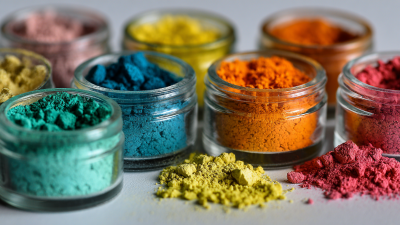
Understanding epoxy resin pigment powders is key for any project involving epoxy. These powders come in various colors and types, offering versatility for different artistic or industrial applications. When selecting pigments, consider their opacity and particle size.
Larger particles may create texture, while smaller ones can provide a smooth finish. The color saturation can also vary greatly.
Another important aspect is compatibility with the epoxy resin. Some pigments react differently when mixed, affecting curing times and the final appearance. It's essential to test a small batch to observe any unexpected changes. Additionally, consider how the pigment interacts with light. Some colors may look vibrant under natural light but appear dull indoors.
Choosing the right pigment powder involves trial and error. You may encounter clumping or uneven mixing with certain products. Document your experiences to refine your selection process. Each project could bring unique challenges, and reflecting on previous outcomes will guide you in making better choices in the future. Embrace the learning journey, as not every decision will lead to perfection.
Types of Pigment Powders for Epoxy Resins
When selecting pigment powders for epoxy resins, it’s essential to understand the different types available. The market offers various options, including mica powders, synthetic dyes, and natural colorants. Mica powders are popular for their shimmering and pearlescent effects. Reports indicate that they account for around 30% of the industry, prized for their durability and vibrant hues. This pigment provides excellent lightfastness, making it suitable for both indoor and outdoor projects.
Synthetic dyes are another frequent choice. They offer vibrant colors, but their UV stability can be less reliable. Users should consider the longevity of their project when opting for these pigments. Data shows that about 25% of epoxy artists prefer synthetic dyes for their boldness, despite potential fading over time. Natural colorants, derived from organic sources, are gaining traction due to an increasing awareness of environmental impact. However, their variability in color consistency can be a challenge. This unreliability can lead to unforeseen changes in a project’s final appearance.
Understanding these differences is critical. Each type of pigment can significantly alter the outcome of your epoxy project. Choosing a suitable pigment involves weighing durability, color intensity, and environmental impact. Such evaluations can help create visually stunning and long-lasting art pieces.
Comparison of Epoxy Resin Pigment Powders
Factors to Consider When Choosing Pigment Powders
Choosing the right epoxy resin pigment powder is crucial for any project. Several factors impact your decision, including color stability, ease of mixing, and application method. A recent industry report indicates that over 70% of users value color accuracy. This highlights the importance of selecting high-quality pigments.
When considering pigment powders, take note of transparency and UV resistance. Some pigments fade or alter in color when exposed to sunlight. Research shows that more opaque pigments tend to maintain their color intensity better than transparent options. This point is essential for outdoor applications.
Tip: Always test your chosen pigment in a small batch before full application. This ensures compatibility with your resin. Additionally, consider the batch consistency. Variations can lead to unexpected results. Choosing the right pigment can mean the difference between a stunning finish and a disappointing outcome. So, don’t rush the selection process. Careful consideration will yield the best results for your projects.
Testing and Mixing Pigment Powders with Epoxy Resin
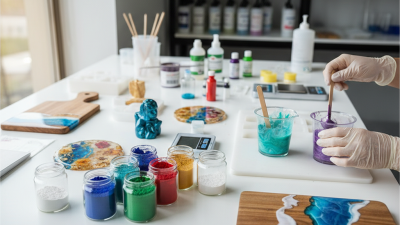
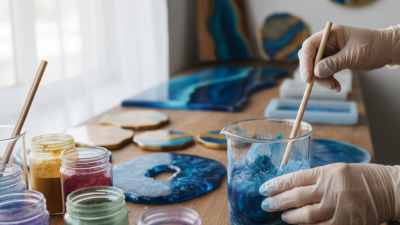
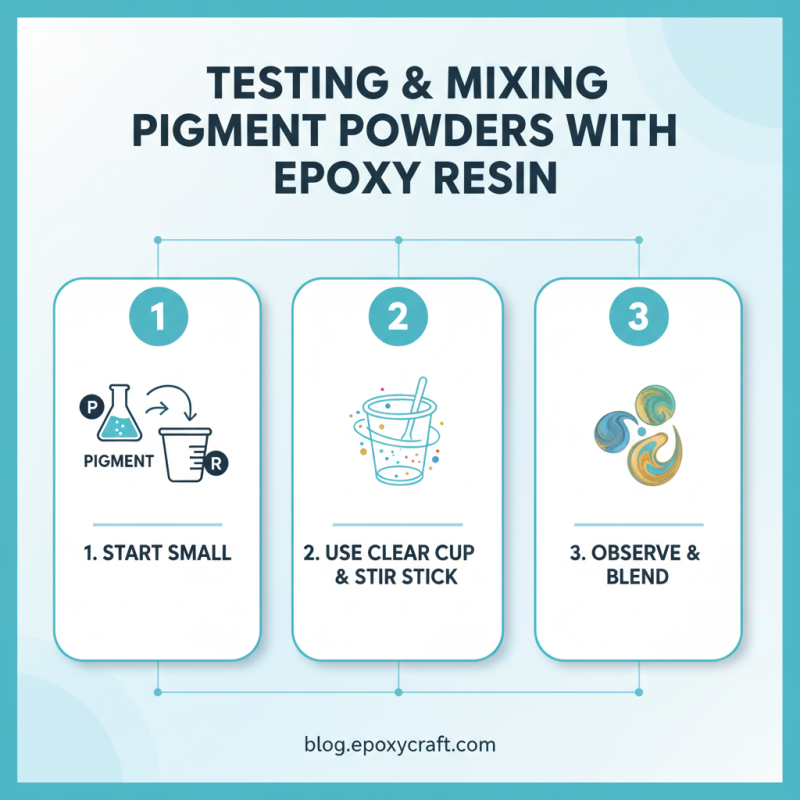
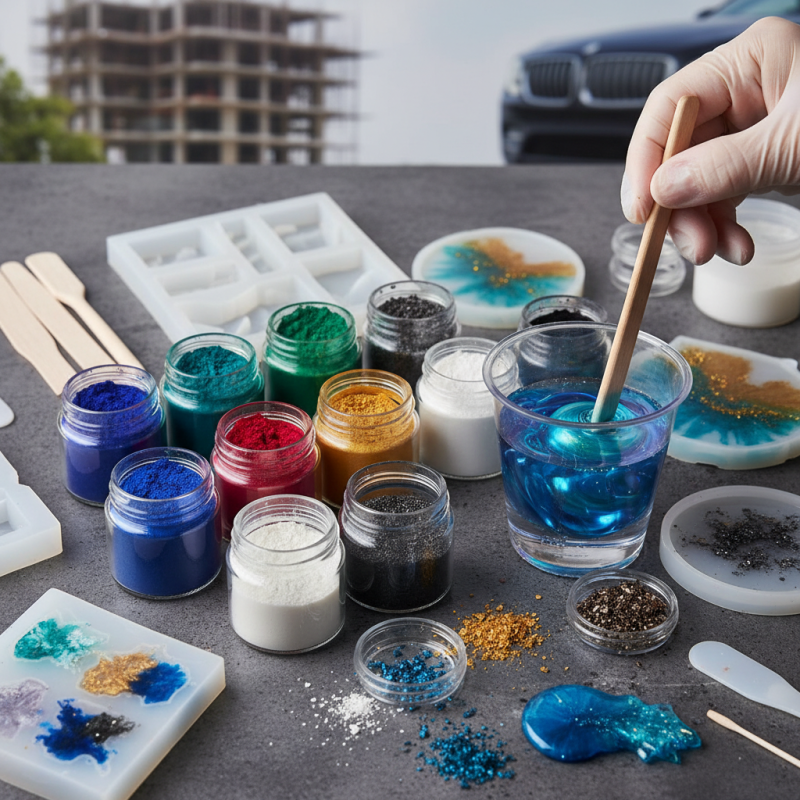
When testing and mixing pigment powders with epoxy resin, it’s important to take a careful approach. Begin by selecting a small amount of resin to experiment with. This allows you to see how the pigments blend and react without wasting too much material. Use a clear cup and a stir stick for this process.
A tip: Always wear gloves. Pigments can stain your skin, and safety should come first. Start with a little pigment powder; you can always add more to achieve the desired color. Mix thoroughly to ensure there are no clumps. If the color seems off, add small increments rather than going all out with a large amount.
Keep track of your color ratios. It can be easy to forget how much you added, and consistency is key for future projects. If you feel the mixture is not vibrant enough, consider testing different brands of powders. Not all pigments perform the same in epoxy. Each batch may behave differently when mixed, and some may take longer to achieve a full cure. Always be ready for surprises.
Best Practices for Applying Pigmented Epoxy Resins
When applying pigmented epoxy resins, preparation is key. Start by ensuring your workspace is clean and well-ventilated. The right environmental conditions contribute significantly to the final outcome. According to industry reports, temperature and humidity can affect curing times and color vibrancy. The ideal range is typically between 70°F and 90°F with humidity below 50%.
Mixing is another critical step. A ratio of resin to hardener should be followed precisely. Under-mixing can lead to uneven coloration and weak spots. Careful attention to detail in this process enhances durability. Studies show that inadequate mixing can reduce the product's tensile strength by as much as 30%. Use a slow-speed mixer to avoid introducing bubbles, which can mar the final appearance.
Color mixing should be meticulous as well. Start with a small batch to test your desired shade. Build on this until you achieve your ideal color. Remember, pigments can change color based on lighting and base materials. A consistent approach is vital, yet even seasoned professionals sometimes overlook subtle variations. Document your process for future reference to ensure replicability with each new project.
How to Choose the Best Epoxy Resin Pigment Powder for Your Project? - Best Practices for Applying Pigmented Epoxy Resins
| Pigment Type |
Color Stability |
UV Resistance |
Mix Ratio |
Application Method |
| Powdered Pigment |
High |
Low |
1-5% by weight |
Mix with resin |
| Liquid Pigment |
Medium |
High |
5-10% by volume |
Directly mix |
| Emulsion Pigment |
Medium |
Medium |
10-15% by weight |
Stir into resin |
| Thermal Pigment |
High |
High |
2-8% by weight |
Mix thoroughly |