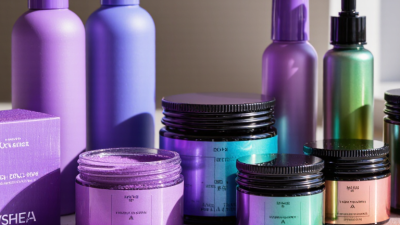
Chameleon Powder Pigment has moved from a specialty effect material to a practical choice for coatings, plastics, automotive finishes, cosmetics packaging, and decorative products. Its color shifts with viewing angle, light direction, and surface preparation. That visual movement attracts buyers, but it also makes supplier evaluation more demanding.
Dr. Robert M. Christie, a recognized color-chemistry specialist, wrote, “Colour is a sensation produced by the response of the eye to light.” This principle explains why two samples may appear different under daylight and showroom lighting. Experienced buyers should examine supplier samples under controlled conditions. They should also request technical data covering particle size, color shift range, heat resistance, solvent compatibility, and outdoor durability.
Quality is not created by appearance alone. A reliable Chameleon Powder Pigment supplier should provide traceable batches, clear safety documentation, consistent packaging, and responsive technical support. Production trials matter more than attractive sample cards. A powder that performs well on paper may settle unevenly in a clear coat or lose intensity after curing.
This guide compares leading suppliers worldwide through practical criteria, including manufacturing capability, customization, minimum order quantities, testing support, delivery reliability, and application knowledge. No ranking is perfect. Regional availability, changing formulations, and limited public data can affect the result. Readers should still test shortlisted products on their own substrates before committing to larger orders. That small step often reveals the real difference between a vivid finish and an expensive disappointment.

Chameleon powder pigment is an effect pigment that shifts color as viewing angles or lighting conditions change. It does not produce color like ordinary dye. Instead, it manipulates reflected light.
Manufacturers usually build these particles with thin, layered materials around a mineral or synthetic core. Each layer has a different refractive index. When light enters the coating, some wavelengths reflect while others pass through or cancel out. A small angle change can therefore move the visible color from green to gold, violet, or blue. The effect resembles an oil sheen on wet pavement. It is optical, not chemical.
MarketsandMarkets reported that the global effect pigments market was valued at about USD 2.4 billion in 2023, with continued growth expected through 2028. Grand View Research also identifies automotive coatings, packaging, plastics, and cosmetics as major application areas. These reports show commercial demand, but they do not prove that every powder performs equally.
Particle size, coating thickness, dispersion, and surface preparation control the final appearance. Poor mixing creates cloudy patches. Too much pigment can weaken transparency and reduce color travel. That part is often underestimated. In practical testing, suppliers should provide angle-dependent color measurements, particle-size data, lightfastness results, and safety documentation. A sample may look dramatic under a showroom lamp, yet appear ordinary outdoors. Real evaluation needs several light sources, viewing angles, and substrate colors.

Chameleon pigments are specialized effect pigments that shift color as viewing angles change. Their main types include mica-based interference pigments, multilayer-coated particles, and synthetic optical flakes. Mica systems usually create softer transitions, while multilayer structures can deliver stronger blue-to-purple or green-to-gold color travel. Particle size matters. Fine particles produce smoother surfaces, while larger flakes create brighter flashes but may feel rough.
According to MarketsandMarkets, the global effect pigments market was estimated at about USD 1.3 billion in 2023 and may reach USD 1.8 billion by 2028. This growth reflects demand for visual differentiation in coatings, plastics, printing, and personal-care packaging. Performance testing should include angle-dependent color measurement, hiding power, gloss, dispersion stability, and lightfastness. ASTM D2244 can help evaluate color difference, while accelerated weathering methods can expose fading risks. A beautiful sample proves very little.
In practical sourcing, suppliers should provide particle-size distribution, recommended loading, carrier compatibility, and outdoor durability data. Automotive-grade applications often need stronger UV and chemical resistance than indoor decorative coatings. Poor dispersion can create dark specks, uneven color travel, or sedimentation inside the container. I have found that dramatic color shift can reduce opacity. This trade-off deserves honest testing. Reported durability may also change sharply after baking, spraying, or repeated rubbing. Sample panels should be inspected under daylight, cool white light, and angled illumination before approval.
Typical particle-size ranges strongly influence sparkle, color travel, coverage, and dispersion behavior. Smaller particles create a smoother appearance, while larger flakes generally provide stronger brilliance and flop.
Particle-size values are representative industry ranges in micrometres (µm); actual grades vary by coating design, optical layer thickness, and intended application.
Evaluating chameleon powder pigment suppliers requires more than comparing prices. Request a physical sample before placing a large order. Apply it to the intended surface, such as black plastic, coated metal, or automotive paint. Check the color shift under sunlight, warm LEDs, and cloudy indoor light. The effect should remain smooth, without dull patches or visible clumps. Small details matter.
Ask for a current technical data sheet, safety data sheet, certificate of analysis, and batch number. Reliable suppliers should explain particle size, recommended loading, carrier compatibility, curing conditions, and storage life. Compare these documents with the sample results. A polished document is not proof of stable production. Testing is.
Supplier experience also appears in practical answers. Can the technical team recommend dispersion methods? Can they explain why the pigment settles after mixing? Ask about quality controls, production capacity, minimum order quantities, packaging, and replacement procedures. Inspect sealed packaging carefully. Moisture damage can change powder flow and color performance. Communication speed is useful, but technical accuracy matters more.
Do not accept vague claims about “perfect” consistency. Even good suppliers may show slight variation between batches. That point deserves written limits. A sensible evaluation includes a second sample from another batch, when possible. Keep test records with photos, mixing ratios, application thickness, and lighting conditions. This process takes time. Still, it exposes weaknesses before they become expensive production problems.
A practical, brand-neutral comparison framework for screening global chameleon powder pigment suppliers. Figures below are commonly used industry benchmarks and should be confirmed with current technical documents and samples.
| Evaluation Dimension | Industry-Relevant Benchmark | Preferred Supplier Evidence | Typical Market Range or Requirement | Risk Indicator |
|---|---|---|---|---|
| Pigment Technology | Multilayer interference pigments based on coated plate-like substrates, commonly mica, synthetic mica, glass, or silica. | Technical data sheet identifying substrate, coating structure, optical effect, and application limitations. | Interference pigmentColor-shifting effectLayered structure | Unclear composition or no technical description. |
| Color-Travel Performance | Visible hue transition under changing viewing angle and lighting conditions, with consistent appearance between batches. | Standardized color panels, viewing-angle photographs, spectral data, and approved master sample. | Evaluate at minimum under 0°, 45°, and 90° viewing positions. | Only one photograph or no defined lighting condition. |
| Particle Size Distribution | Particle size must match the end use; finer grades generally support smoother coatings, while larger grades may create stronger sparkle. | Laser-diffraction or equivalent particle-size report showing D10, D50, and D90 values. | Common commercial grades are often approximately 5–100 μm, depending on application and visual effect. | Only an average size is provided without distribution data. |
| Optical Strength | Stable color intensity, brightness, and flop after dispersion in the intended binder or coating system. | Formulation test results using the customer’s resin, solvent, waterborne system, or plastic carrier. | Require side-by-side drawdowns at several pigment loading levels before approval. | Performance is demonstrated only in an unrelated formulation. |
| Chemical Compatibility | Compatibility with the intended pH, solvent system, resin, plastic, ink, or cosmetic base. | Compatibility chart, recommended loading level, dispersion procedure, and stability observations. | Test separately for waterborne, solvent-borne, UV-curable, plastic, and cosmetic applications. | Pigment settles, agglomerates, fades, or reacts during storage testing. |
| Heat and Light Resistance | Resistance depends on substrate, coating chemistry, exposure time, temperature, and application thickness. | Application-specific heat-aging and lightfastness test reports using stated test conditions. | For plastics, request testing at the actual processing temperature; for coatings, test under the target exposure cycle. | Generic claims without temperature, duration, lamp type, or test method. |
| Regulatory Documentation | Documentation should match the destination market and intended use rather than relying on a universal compliance claim. | SDS, technical data sheet, composition or restricted-substance statement, and applicable compliance declarations. | REACH statusRoHS statusHeavy-metal statementUse-specific declarations | Outdated documents, missing revision dates, or unsupported food/cosmetic claims. |
| Quality Consistency | Batch-to-batch consistency in hue, particle size, brightness, moisture, and dispersion behavior. | Certificate of analysis for each batch, retained reference sample, lot traceability, and documented quality procedure. | Use an agreed color tolerance and approval sample before mass production. | No lot number or no defined acceptance criteria. |
| Packaging and Shelf Life | Moisture-resistant, sealed packaging with clear lot identification and storage instructions. | Packaging specification, recommended storage conditions, manufacturing date, expiry or retest period. | Store in a cool, dry environment and protect from contamination; confirm the supplier’s stated shelf life. | Damaged seals, missing date codes, or unexplained clumping. |
| Minimum Order Quantity | MOQ varies by grade, custom color, packaging format, and production scale. | Written quotation separating standard-stock MOQ from custom-development MOQ. | Small trial quantities may be available for standard grades; custom shades usually require higher commitments. | MOQ changes after sampling or is not stated in the quotation. |
| Sample and Development Support | Reliable suppliers should provide representative samples and practical dispersion guidance. | Sample set, formulation support, application data, and a defined technical contact. | Request at least one sample from the proposed production grade, not only a laboratory prototype. | Sample quality cannot be linked to a production specification. |
| Production Lead Time | Lead time depends on stock status, raw-material availability, custom color development, and export arrangements. | Written production schedule, stock confirmation, shipping terms, and contingency plan. | Standard stocked grades are generally faster than custom shades; confirm the exact number of calendar or working days. | No committed date or repeated changes without explanation. |
| Export and Logistics Capability | International supply requires correct classification, packaging, documentation, and delivery coordination. | Commercial invoice, packing list, SDS, transport information, Incoterms, and shipment tracking process. | Air freightOcean freightCourier samplesExport documentation | Incomplete shipping documents or inconsistent product descriptions. |
| Total Cost of Ownership | Compare pigment price together with dosage, dispersion efficiency, freight, rejected batches, and technical support. | Transparent quotation, recommended dosage, packaging cost, freight terms, and sample approval conditions. | Evaluate cost per finished kilogram or finished unit, not pigment price alone. | Low unit price but high dosage, poor yield, or frequent batch variation. |
| Supplier Evaluation Score | Use a weighted score to avoid selecting a supplier based only on price or visual color. | Completed scorecard supported by samples, documents, test results, and commercial references. | Recommended weighting: Quality 30% · Compliance 20% · Technical Support 15% · Delivery 15% · Cost 20% | Supplier selected without documented sample and compliance review. |
Buyer note: Chameleon powder pigment performance is highly application-dependent. Confirm the final grade through laboratory testing, production-scale trials, regulatory review, and written approval of a physical master sample before placing a large order.
Chameleon powder pigment suppliers are concentrated in regions with strong specialty-chemical infrastructure. Asia-Pacific remains the largest manufacturing base, supported by mature coating, plastics, and automotive supply chains. The 2024 Asia-Pacific paints and coatings market analysis from Mordor Intelligence highlights China, Japan, South Korea, and India as major production centers. These countries offer large reactors, skilled formulation teams, and efficient export logistics. However, capacity does not always mean consistent quality.
China is particularly competitive in layered pigment processing and high-volume finishing. Suppliers can often adjust particle size, color travel, and surface treatment for powder coatings or decorative plastics. UN Comtrade data for HS 3206, a broad category covering other coloring matter, shows China as a major global exporter. This classification is only a proxy. It does not isolate chameleon pigments, so buyers should avoid treating it as a perfect market measurement. Small differences in mica thickness can visibly change the transition from green to bronze under showroom lighting.
Europe’s strength is process control, documentation, and environmental testing. German, Italian, and Central European producers often serve premium coatings and industrial design applications. North American suppliers tend to emphasize technical support, custom blends, and shorter communication cycles. SGS and ISO-based testing commonly covers heat stability, migration, weather resistance, and batch uniformity. In practice, the best supplier may not be the largest. I would request three retained samples, a lot-to-lot color report, and accelerated weathering results before approving production. Suppliers sometimes provide attractive panels, but not enough data. That remains a weakness.
Quality begins with measurable control, not a colorful sample.
Grand View Research’s 2024 effect-pigments analysis values the broader market above USD 4 billion in 2023, with mid-single-digit annual growth expected. Chameleon powders remain a specialized segment within that market. Reliable suppliers should document particle-size distribution, color travel, purity, heat stability, and batch-to-batch variation. Ask for a technical data sheet, safety data sheet, and recent certificate of analysis. Samples matter.
For coatings, automotive interiors, plastics, printing inks, and decorative packaging, application testing must reflect the final surface. A pigment may shift from violet to green under angled light, yet appear dull in a thick plastic part.
Suppliers should provide test panels, recommended loading levels, and compatibility data for the chosen resin or binder. ASTM E308 can support instrumental color evaluation, while ASTM D3359 helps assess coating adhesion. ISO 2813 is useful for comparing gloss.
These tests do not replace real production trials.
Purchasing decisions should also examine weathering performance, moisture resistance, minimum order quantities, lead times, and packaging protection. Market reports from Mordor Intelligence identify automotive coatings and plastics as important demand areas for effect pigments, but demand forecasts are not quality guarantees.
I would not approve a large order from a single visual sample. It is an easy mistake. Compare at least three batches, test under daylight and artificial light, and confirm regional compliance documentation before signing a supply agreement. Suppliers that answer technical questions clearly are usually safer partners, although communication alone cannot prove long-term consistency.