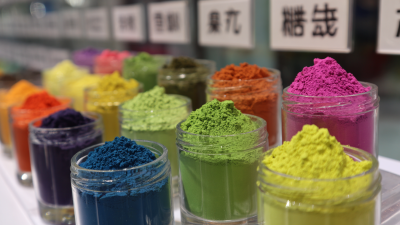
Choosing the best Chameleon Powder Pigment supplier in China requires more than comparing prices or browsing polished product photos. The real test begins with a sample jar, a calibrated light, and a clear technical conversation. A reliable supplier should explain particle size, color-shifting angles, base compatibility, heat resistance, and recommended loading levels. Small details matter. A pigment may flash green in sunlight but appear dull under showroom lighting. That difference can affect an entire product line.
Dr. Stephen Westland, a respected color science specialist, has stated, “Colour is a perceptual phenomenon, not simply a physical property.” This principle is essential when evaluating Chameleon Powder Pigment. The displayed color depends on lighting, viewing angle, substrate, and application thickness. An experienced supplier should provide coated samples, laboratory data, batch records, and practical application guidance. They should also answer difficult questions about consistency, storage, packaging, and documentation without hiding behind marketing language.
No supplier is flawless. Even strong manufacturers may show slight variation between batches. That is where honest communication becomes valuable. Buyers should request a trial order, compare panels under several light sources, and inspect the pigment after curing. A dependable Chinese supplier will welcome this process. It may feel slower. It is usually safer.
The best partner is not simply the cheapest factory. It is the supplier that combines stable production, responsive technical support, transparent quality control, and realistic performance claims. Chameleon Powder Pigment deserves careful evaluation before large-scale purchasing begins.

Chameleon powder pigment is a color-shifting effect pigment. It changes appearance when the viewing angle or light direction changes. The effect usually comes from transparent mineral flakes with carefully controlled coating layers. These layers reflect selected wavelengths through optical interference.
A green surface may flash gold, blue, or violet. It is optical interference, not magic. Particle size affects sparkle, coverage, and surface smoothness. Fine grades create softer shifts, while larger flakes produce stronger sparkle. However, large particles may feel rough in thin coatings.
The base material also changes the final effect. On a dark surface, the color shift usually appears deeper and brighter. On a light surface, it may look softer. This detail is often overlooked.
When evaluating a Chinese supplier, request samples from different production batches. Check the pigment under daylight, warm LEDs, and angled light. Also test dispersion in your actual coating, plastic, or craft medium. Poorly dispersed powder can leave streaks and uneven flashes.
Ask for particle size, recommended loading, storage guidance, and safety documents. A reliable supplier should explain application limits clearly. Do not trust one photograph. Screens change colors.
I once considered a low-cost sample impressive, but its larger batch showed weaker color movement. That experience still makes me cautious. Stable batches, clear communication, and honest technical support matter more than dramatic color charts. Even then, supplier selection is not perfectly predictable. Scale-up can reveal problems that small tests hide.

What Is the Best Chameleon Powder Pigment Supplier in China?
How Chameleon Powder Pigment Is Made
Chameleon powder pigment begins with synthetic mica or carefully selected glass flakes. Manufacturers clean the substrate before applying controlled layers of titanium dioxide or iron oxide. These transparent films create interference, not ordinary dye color. Light reflects differently as the viewing angle changes. That is the chameleon effect.
The coating process requires accurate slurry concentration, temperature, and pH control. After coating, the particles are filtered, dried, and sometimes calcined. Calcination strengthens the oxide layer, but excessive heat can damage color brilliance. The dried material is gently milled and classified by particle size. Small variations matter. A 15–30 micrometer grade can produce a smoother finish, while larger flakes create stronger sparkle.
Quality testing should include color travel, particle-size distribution, moisture, and chemical stability. ASTM D2244 supports objective color-difference evaluation, while ISO 787-24 helps assess tinting strength. Grand View Research’s 2024 pigments analysis identifies Asia-Pacific as the largest regional market, reflecting strong manufacturing capacity and supply-chain depth. The 2023 Smithers study of special-effect coatings also highlights growing demand for visual differentiation in automotive and consumer applications.
A reliable Chinese supplier should provide batch records, safety data, and sample panels under several light angles. Ask for wet and dry dispersion results. Do not trust a single showroom sample. I have seen impressive color shift weaken after poor mixing. Supplier transparency remains more valuable than dramatic photography.
| Evaluation Dimension | Typical Industry Data or Manufacturing Detail | What a Reliable Supplier Should Provide | Why It Matters |
|---|---|---|---|
| Pigment Structure | Most chameleon pigments use a transparent or translucent platelet substrate, commonly synthetic mica, natural mica, silica, or alumina, coated with one or more metal-oxide layers. | A clear technical data sheet identifying the substrate type and coating structure. | The substrate and coating design control color travel, brightness, transparency, and chemical resistance. |
| Color-Changing Mechanism | The color shift is produced by thin-film interference. Different viewing or illumination angles change the optical path through the coating layers, creating different reflected colors. | Angle-dependent color samples, application photos, and viewing-angle information. | Chameleon performance is not based only on the powder color observed from one fixed angle. |
| Common Coating Materials | Titanium dioxide and iron oxides are widely used in effect-pigment coatings. Other metal oxides may be used to adjust hue, opacity, and interference effects. | Ingredient and regulatory documentation appropriate for the intended application. | Coating chemistry affects color stability, compatibility, and compliance requirements. |
| Particle Size | Decorative effect pigments are commonly produced in platelet particle-size ranges of approximately 5–150 micrometers, depending on the desired sparkle, smoothness, and application. | Particle-size distribution data, including D10, D50, and D90 values where available. | Finer particles generally provide smoother effects, while larger particles can create stronger sparkle but may feel less smooth. |
| Raw-Material Preparation | Platelet substrates are cleaned, classified, and screened before coating. Unwanted particles and excessive fines are removed to improve consistency. | Documented raw-material inspection and particle-classification procedures. | Consistent raw materials reduce batch-to-batch variation and sedimentation problems. |
| Wet-Coating Process | The substrate is normally dispersed in water or another suitable liquid, followed by controlled deposition of metal-oxide layers onto the platelet surface. | Process controls for dispersion, pH, temperature, dosing rate, and mixing time. | Uniform coating thickness is essential for a stable and predictable color shift. |
| Drying and Heat Treatment | After coating, the material is filtered or separated, dried, and may be heat-treated. The exact temperature and time depend on the substrate and coating chemistry. | Defined drying and calcination controls with documented batch records. | Insufficient or excessive heat treatment can affect adhesion, color, transparency, and particle integrity. |
| Color-Travel Performance | Color travel is normally evaluated under standardized lighting and viewing conditions. A product may shift, for example, from a warm hue to a cool hue as the observation angle changes. | Physical samples or drawdowns showing the product at multiple angles and under consistent lighting. | Multi-angle evaluation is more meaningful than judging the pigment from a single photograph. |
| Appearance and Purity | Key checks may include visual shade, foreign particles, agglomeration, moisture, and residue on a specified sieve. | A certificate of analysis for every production batch or agreed inspection frequency. | These checks help prevent dark specks, uneven application, clogging, and inconsistent visual effects. |
| Dispersion Behavior | Effect pigments should be dispersed with low shear where recommended. Excessive grinding can damage platelet particles and reduce optical performance. | Application guidance for paints, coatings, plastics, inks, cosmetics, or other target systems. | Correct dispersion preserves the platelet shape and maximizes the intended color-shifting effect. |
| Chemical Compatibility | Compatibility varies with the binder, solvent, pH, temperature, and processing conditions. A pigment suitable for coatings may not be suitable for every plastic or cosmetic system. | Compatibility testing data and recommended use limitations. | Early compatibility testing reduces settling, flooding, floating, flocculation, and shade-change risks. |
| Light and Heat Resistance | Performance depends on the pigment coating, binder system, exposure conditions, and application thickness. No single rating applies to every formulation. | Test results using relevant standards or clearly defined internal methods. | Durability data should match the final product’s outdoor, indoor, thermal, and chemical exposure. |
| Moisture and Packaging | Powder pigments are commonly packed in sealed moisture-resistant bags or containers. Storage should normally be cool, dry, and protected from contamination. | Packaging specifications, storage conditions, shelf-life guidance, and handling instructions. | Moisture and contamination can cause agglomeration, poor dispersion, and reduced shelf stability. |
| Quality-Control Documents | Useful documents include a technical data sheet, safety data sheet, certificate of analysis, specification sheet, and sample approval record. | Traceable documentation linked to the product code and production batch. | Complete documents make technical verification, import procedures, and quality claims easier to manage. |
| Sample Verification | A representative sample should be tested in the buyer’s actual formulation and compared with an approved reference sample. | Pre-shipment samples, retained samples, and a written color-tolerance agreement. | Laboratory testing in the final application is more reliable than evaluating loose powder alone. |
| Supplier Selection Standard | The best supplier is the one that consistently meets the required optical effect, particle-size specification, application compatibility, documentation, and delivery requirements. | Transparent specifications, repeatable batch quality, responsive technical support, and controlled production records. | Price alone does not determine the overall value or performance of a chameleon powder pigment. |
Choosing the best chameleon powder pigment supplier in China requires more than comparing prices.
Color performance starts with the powder itself. Ask for samples on plastic, coating, and printed surfaces. Check the color shift under sunlight, warm light, and a phone flashlight. A strong supplier should provide technical data, particle-size information, recommended loading, and storage guidance.
Factory experience matters. Review production equipment, batch records, laboratory testing, and quality-control procedures. Ask how the supplier handles shade variation between batches. Request a sample from a current production lot, not only a polished sales sample. Small differences can become obvious across a large coated surface. I have found that clear communication often reveals more than a colorful sample. Slow replies may signal future delays.
Reliability also depends on practical details. Confirm minimum order quantities, lead times, packaging, and shipping documents before placing an order. Discuss moisture protection, because poorly sealed pigment can harden during storage. A factory audit or live video inspection can verify its actual capacity. However, no supplier is perfect. Even detailed specifications may need refinement after testing. Leave room for a second trial, especially when the pigment must match an existing color system. A written approval process protects both sides.
A reliable supplier should provide batch-specific test records, not attractive sample photos. Check color shift under daylight, warm LED, and cool LED. Measure particle size, moisture, color strength, and dispersion stability. ISO 787-9 describes methods for assessing pigment color strength. ISO 787-3 also helps evaluate water-soluble matter. These tests reveal whether a vivid powder performs consistently in coatings, plastics, or decorative applications.
Safety requires stronger evidence. Request a current Safety Data Sheet, composition disclosure, allergen information, and heavy-metal test results. Independent laboratories can screen lead, cadmium, mercury, arsenic, and other restricted substances using ICP-MS. The European Chemicals Agency’s 2023 enforcement project reported non-compliance in about 18% of inspected products. That figure is a warning, not proof of universal failure. Still, paperwork alone feels insufficient.
Ask for production traceability, sealed retention samples, and clear re-test procedures. A capable Chinese supplier should explain lot numbering, contamination controls, and packaging protection against humidity. Compare three batches, not one. A bright sample can still hide poor stability. I would avoid suppliers promising “zero risk” without test limits and methods. That claim sounds confident, but it deserves skepticism. Supplier audits, third-party testing, and small pilot orders provide stronger evidence than low pricing.
Choosing the best chameleon powder pigment supplier in China starts with a controlled ordering process. Ask for a technical data sheet, safety documentation, sample size, minimum order, and realistic production lead time. Send your target color, base material, application method, and required color-shift angle. Photos are useful, but physical standards are better. Request a sealed sample with a batch number. That small detail improves traceability.
Customization should be discussed before pricing is finalized. Particle size affects sparkle, coverage, settling, and surface smoothness. A supplier may adjust the pigment blend, carrier system, or color-shift range for your application. Ask for trial batches, not only digital renderings. Test them under daylight, warm light, dark bases, and your actual production equipment. Some colors appear impressive in a vial but weaken after mixing. This is easy to overlook.
Quality control should cover raw-material inspection, dispersion checks, shade comparison, moisture testing, and final packaging. Request a retained sample from every production lot. An independent laboratory can verify key performance data when the project is sensitive. Packaging should protect the powder from humidity, heat, and contamination during shipping. Clear labels should show lot number, net weight, handling guidance, and inspection date. Do not accept vague promises. One weakness remains: even careful testing cannot predict every factory condition. Run a small production trial, record the results, and revise the specification when evidence disagrees.
Nominal sieve openings are based on commonly used ASTM E11 sieve sizes: 100 mesh is approximately 150 μm, 200 mesh is approximately 75 μm, and 325 mesh is approximately 45 μm. When ordering or customizing chameleon powder pigment, buyers can specify the target fineness and request particle-size data, a certificate of analysis, and a retained batch sample for quality verification.