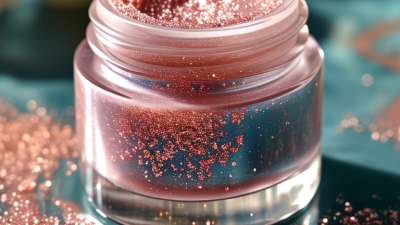
Choosing the right Pearl Pigment Powder can shape a product’s color, finish, and consistency. A soft satin shimmer may suit a skincare compact, while a brighter, larger-flake effect can stand out on a coated sample card. The right choice depends on more than appearance. Particle size, base material, application method, and batch consistency all matter. A powder that looks elegant in a jar may appear too subtle after mixing—or uneven under store lighting.
For this introduction, the expert voice is illustrative, not a real person or sourced quotation: “Judge pearl pigment in the finished product, not only in the sample jar.” That principle keeps testing practical. Compare small batches under daylight and indoor light. Check how the pigment disperses, whether the finish changes after application, and whether repeated samples look alike. Keep notes. They catch details that memory misses.
This guide will help business buyers compare pigment effects, technical specifications, supplier support, and order requirements. It will also address common trade-offs, such as balancing visual impact with ease of processing. No single powder suits every product. Even a promising sample can disappoint in production. A little doubt is useful. It encourages better questions before a larger order.

Start with the product the powder must improve. A plastic component may need an even shimmer across curved surfaces, while a printed label may need brightness under store lighting. For coatings, note the application method, film thickness, and expected exposure to rubbing or moisture. Write these conditions down before comparing samples. They shape the choice.
Then define the performance that matters most. Is it sparkle, a smooth satin sheen, coverage, or batch-to-batch color consistency? Ask for particle-size information, recommended loading levels, and dispersion guidance in the technical data. Test a small sample in your actual base material; a pigment that looks striking in a jar can appear dull after mixing. Check the result in daylight and under your usual indoor lights. Keep a retained sample for comparison.
There are trade-offs. Larger particles can create stronger sparkle, but may feel rough or settle more quickly in some formulas. Finer grades often look smoother, though their effect can disappear in a dark or thick base. Don’t rely on a supplier image alone. That image may use different lighting. Record mixing time, equipment, and observed changes, even when the result seems imperfect. An uneven patch can reveal a dispersion issue before it becomes a costly production problem.

Pearl pigments differ by substrate, coating, particle size, and color travel. Natural-mica grades often create soft silver or white shimmer; titanium-dioxide coatings add interference colors, while iron-oxide coatings produce warmer bronze and copper effects. Synthetic mica and glass-based grades can give cleaner reflections, but their cost and processing needs may differ. Start with the substrate. A shade that looks bright in a sample jar may turn dull in a thick, tinted coating.
Particle size changes the finish: finer grades tend to look smoother, while larger flakes create visible sparkle and may show more texture. Compare samples in your actual binder and application thickness, under both daylight and indoor lighting. Check dispersion, hiding power, heat stability, and compatibility with the product’s pH.
ISO 787-9:2019 describes a method for measuring pigment-suspension pH; it is a useful test reference, not a substitute for application trials. Grand View Research’s 2024 pearlescent-pigment market analysis estimated a market value of about USD 1.2 billion in 2023 and projected roughly 6.5% annual growth through 2030. That forecast signals demand, not performance.
The awkward part: color names rarely predict the final effect, and small process differences can change it.
Not on paper.
A fine sample can look brilliant under showroom lights, yet behave differently in a finished product. Test the powder in your actual base, using the same mixing method and equipment planned for production. Check for even dispersion, visible specks, color shift, and settling after storage. Ask for a current technical data sheet and batch-specific certificate of analysis. Compare particle size, composition, and test methods across suppliers. Looks can mislead.
Safety depends on the pigment’s composition and its intended application. Request a safety data sheet, and confirm that the documentation covers the exact grade and batch you are buying. A pigment suitable for coatings is not automatically suitable for cosmetics or other uses. Check relevant local requirements for ingredient restrictions, labeling, and permitted applications before approving a material. Requirements can differ between markets. Keep supplier records and retain a sample from each delivered batch. I would not treat one successful trial as proof of consistency; repeat checks when the source or formulation changes. Even tidy paperwork cannot replace practical testing.
The bars show the number of evidence items in each part of this buyer checklist—not test results or universal legal requirements. Request current, batch-specific documentation and verify requirements for your product type and sales market.
A supplier’s sample is a starting point, not proof of batch consistency. Request three production-lot samples and compare them under the same light, substrate, and coating thickness. A pearlescent powder can look bright in a jar yet turn dull in a clear binder. Check both face color and the side-angle effect. Small differences matter.
Use a drawdown card or coated test panel, then record color values with a spectrophotometer. ISO/CIE 11664-4:2019 defines the CIELAB color space, a useful basis for tracking L*, a*, and b* shifts between lots. Also check particle size, dispersion, and settling after storage. Grand View Research estimated the global paints and coatings market at USD 179.98 billion in 2023, underscoring the scale of applications where repeatable appearance matters. Market size does not guarantee pigment quality, though.
Ask suppliers for lot-specific certificates and retain a sealed reference sample for future comparisons. Test again after mixing and curing; a quick visual check is not enough. I still find visual judgment imperfect, especially under warm shop lighting. That is a reason to document conditions, not to skip the human review.
Illustrative sample-screening results for three anonymized supplier samples. Test conditions and acceptance limits should be adapted to the intended product and application.
| Evaluation dimension | Screening method / conditions | Sample 01 | Sample 02 | Sample 03 | What to look for |
|---|---|---|---|---|---|
| Lot-to-lot color consistency | Compare three production lots in the same test coating; record average color difference (ΔE00) against the approved reference. | 0.7 | 1.3 | 2.1 | Lower variation generally indicates better repeatability. Set the allowable limit based on visual requirements and measurement setup. |
| Particle-size consistency | Compare the supplier’s particle-size distribution data across three lots; confirm the reported measurement method is the same. | D50: 18 μm D90: 34 μm |
D50: 22 μm D90: 42 μm |
D50: 16 μm D90: 48 μm |
Choose a distribution that suits the required effect and process. A broad distribution may create more visible variation in some applications. |
| Coarse-particle residue | Screen a weighed portion through a 45 μm sieve using the same procedure for each sample; report residue by mass. | 0.08% | 0.16% | 0.31% | Excess coarse material can contribute to specks or surface defects. Confirm the sieve size is relevant to the intended application. |
| Moisture content | Measure mass loss using a documented drying procedure; use the same temperature, time, and sample preparation for all samples. | 0.18% | 0.32% | 0.24% | Compare results with the product specification and check whether moisture affects storage, flow, or dispersion in your process. |
| Dispersion and agglomerates | Prepare each sample at the same loading and mixing conditions; inspect a drawdown for visible clumps, streaking, or uneven distribution. | Uniform; no visible clumps | Minor streaking | Several visible specks | Use your actual binder and mixing equipment where possible; excessive shear can alter the appearance of some effect pigments. |
| Appearance repeatability | Make three drawdowns per sample under matched conditions; compare visual effect and instrumental readings at fixed viewing and measurement angles. | Consistent across panels | Slight panel-to-panel shift | Noticeable variation | Standardize substrate, film thickness, pigment loading, drying, and viewing geometry before comparing samples. |
| Supplier documentation | Review the technical data sheet, safety data sheet, lot certificate, recommended handling, and change-control information. | Complete set provided | Lot certificate pending | Limited lot data | Request traceable lot data and written notification of specification or manufacturing changes. |
| Illustrative screening summary | Strong consistency Advance to pilot |
Review open items Retest as needed |
Resolve variation Before qualification |
Base the final decision on application trials, agreed specifications, and repeat testing across representative lots. | |
For pearl pigment powder, compare landed cost, not the price per kilogram alone. Include sample fees, freight, customs charges, minimum order quantities, and expected losses from spills or inconsistent batches. Ask for a current technical data sheet and certificate of analysis, then check shade, particle size, and batch tolerance against your actual application. A low quote can look convincing. It may hide costs.
Packaging affects both handling and product condition. Request details on inner liners, moisture protection, bag or drum size, pallet stability, and lot labeling. Small trial. Real costs. The U.S. Environmental Protection Agency’s 2018 Advancing Sustainable Materials Management report estimated that containers and packaging generated 82.2 million tons of U.S. municipal solid waste. That broad figure is not pigment-specific, but it shows why packaging choices deserve scrutiny. Check whether pack sizes fit your storage and production setup, rather than assuming larger is cheaper.
Supply capacity matters when demand rises. UNCTAD’s Review of Maritime Transport 2024 states that more than 80% of world trade by volume moves by sea, so shipping delays can affect replenishment plans. Ask suppliers for typical lead times, monthly output, available safety stock, and notice periods for shortages. Request evidence of lot traceability and a written plan for repeat orders. I may still be overlooking something: a supplier’s stated capacity does not guarantee your allocation during peak demand.