
Choosing the right Eye Candy Mica Powder can shape your product quality, customer trust, and profit margins. Color alone is not enough. A vibrant sample may look impressive under studio lights, then appear dull in a finished product.
Business buyers should examine particle size, color consistency, dispersion, surface effect, and intended application. Resin, soap, cosmetics, candles, coatings, and craft projects may require different powder specifications. Always request a current technical data sheet and a representative sample. Check how the powder behaves in your actual formula, not only on a white testing card.
Small details matter.
Reliable suppliers should explain the pigment’s composition, recommended uses, storage conditions, and batch-control practices. For products used on skin, verify relevant safety documentation and regional compliance before making claims. Packaging should protect the powder from moisture, contamination, and unnecessary handling. A sealed pouch or jar can preserve quality better than a loosely closed sample bag.
Do not ignore the commercial side. Compare minimum order quantities, lead times, private-label options, and replacement policies. A low unit price may become expensive when shade variation causes rejected batches. This guide will help you assess Eye Candy Mica Powder with a practical, evidence-based approach. It also recognizes an uncomfortable truth: no supplier, test, or color chart removes every risk. Lighting changes. Formulas behave differently. Careful testing remains essential.
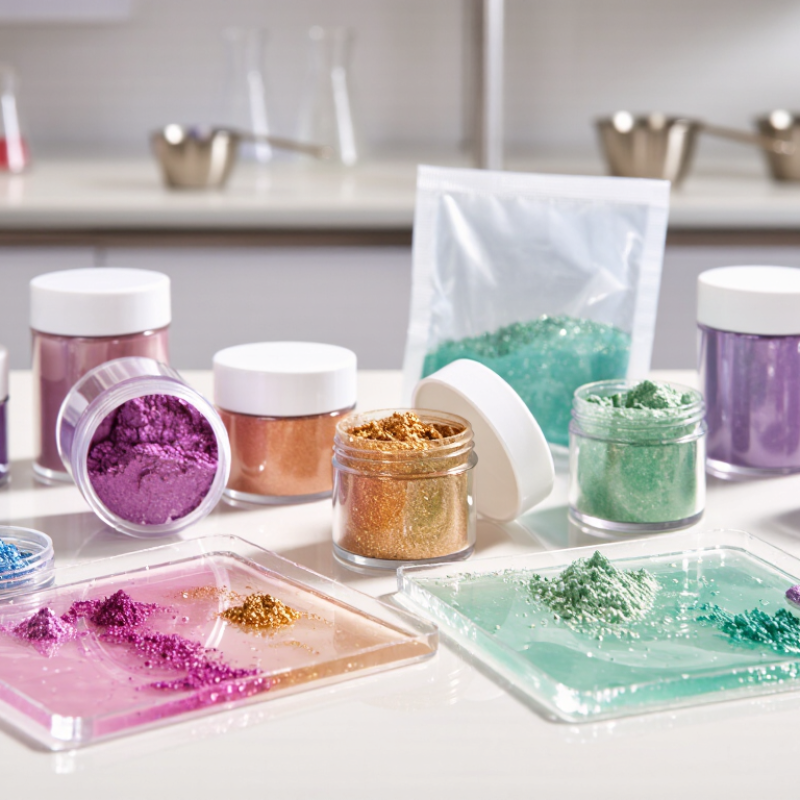
Before selecting eye candy mica powder, define what your business actually makes. Cosmetic shimmer, handmade soap, resin art, and candle decoration require different performance standards. A powder used around the eyes needs verified purity, suitable particle size, and documented safety testing. Decorative craft products may prioritize sparkle, color stability, and easy dispersion instead.
Market evidence supports careful positioning. McKinsey’s 2023 beauty report projects the global beauty market could reach about 590 billion dollars by 2028. Circana reported that United States prestige beauty sales increased 14% in 2023.
These figures suggest opportunity, but demand does not guarantee a suitable pigment. Your application must guide the specification. Test a small batch in the actual base material. Check shade, settling, texture, adhesion, and cleanup under normal production conditions.
Ask suppliers for technical data sheets, safety data sheets, batch numbers, and heavy-metal testing where relevant.
For cosmetic applications, review applicable regional requirements before making claims.
For business use, consistent supply matters as much as visual brilliance. A vivid sample can mislead. Some powders look excellent under studio lighting but appear dull on skin or uneven in resin. Record test results, including mixing ratios and storage conditions. An imperfect trial is still useful; it may reveal that fine sparkle, not maximum sparkle, better fits your customers.

Choosing Eye Candy mica powder for a business requires more than comparing shimmer and price. Pigment quality affects color strength, texture, and customer trust. Request a certificate of analysis for each batch. Check particle size, color consistency, purity, and heavy metal testing. A clean, even sparkle should not feel gritty between gloved fingers. It should also disperse smoothly in the intended formula.
Safety depends on the product’s final use. Cosmetic mica must have documentation supporting cosmetic application, especially for eye-area products. Review the ingredient declaration, safety data sheet, allergen information, and recommended usage levels. Do not treat craft-grade powder as suitable for skin, lips, or eyes. A supplier should explain sourcing and provide traceable batch numbers. If answers remain vague, pause the order. That hesitation can protect your business.
Craft projects may accept different specifications, but the label should state those limits clearly. Ask whether the powder works in resin, soap, paint, or paper applications. Testing a small sample can reveal bleeding, clumping, or weak coverage. Record the formula, mixing time, and finished appearance. My own testing has sometimes focused too much on color and missed packaging dust control. That mistake is easy to repeat. A practical review includes storage conditions, worker handling, customer instructions, and the standards required in every market where the product is sold.
| Evaluation Dimension | Cosmetic-Grade Target | Craft-Grade Target | Recommended Evidence or Test | Business Decision |
|---|---|---|---|---|
| Intended Use | Suitable for the specific cosmetic application, such as face, body, lips, nails, or hair, subject to local regulations. | Clearly labeled for non-cosmetic uses such as resin, candles, soap decoration, paper crafts, or art projects. | Review the supplier’s intended-use statement and product technical data sheet. | Do not market craft-grade powder for application to skin, eyes, lips, or mucous membranes. |
| Ingredient and Color Identification | Full ingredient or color-index disclosure, such as Mica (CI 77019), titanium dioxide (CI 77891), or approved iron oxides where applicable. | Complete material description and pigment composition for compatibility with the chosen craft medium. | Check the specification sheet, Safety Data Sheet, and applicable regional ingredient lists. | Reject products with undisclosed colorants, fillers, or surface treatments. |
| Particle Size and Texture | Fine, smooth particles appropriate for the intended cosmetic area; eye-area products require extra attention to irritation and particle migration. | Particle size selected for the medium, visual effect, and application method; smoothness is useful but cosmetic suitability is not implied. | Request particle-size distribution data and inspect a retained sample under magnification. | Use a separate specification for face, eye, lip, and craft applications rather than one universal grade. |
| Heavy-Metal and Contaminant Control | Documented testing for relevant contaminants, including lead, arsenic, mercury, cadmium, and microbial contamination where applicable. | Contaminant information appropriate to the craft use; cosmetic-level testing should not be assumed. | Obtain recent batch-specific certificates of analysis from a qualified laboratory or supplier. | Place the material on hold if test limits, methods, or batch identification are missing. |
| Microbiological Quality | Low microbial burden and controlled manufacturing, especially for water-containing or preservative-free formulations. | Microbiological controls may be limited or dependent on the craft application. | Review microbial test results, hygienic production controls, and packaging conditions. | Require stronger controls when the powder will be incorporated into leave-on cosmetics. |
| Color Strength and Coverage | Consistent color strength, reflectivity, and coverage across production batches. | Visual consistency appropriate to the project; coverage may vary by resin, wax, paint, or adhesive base. | Compare a standard drawdown or formulation sample against an approved retained reference. | Define an internal color-tolerance range before accepting repeat orders. |
| Dispersion and Compatibility | Disperses evenly in the intended base without excessive settling, clumping, bleeding, or unwanted skin feel. | Performs acceptably in the selected craft base, but may not be compatible with every oil, wax, polymer, or water-based system. | Run a small-batch compatibility test at the planned use level and after storage. | Approve only after testing the actual formulation or craft medium. |
| Light, Heat, and Storage Stability | Stable appearance and performance under the product’s expected light, heat, humidity, and shelf-life conditions. | Stability depends on the craft medium and storage environment; decorative performance should be verified. | Conduct accelerated or comparative storage checks in sealed, labeled containers. | Use moisture-resistant packaging and define a practical retest period. |
| Safety Data and Handling | Safety information should address dust inhalation, eye contact, accidental ingestion, storage, and handling controls. | Safety information should cover airborne dust, personal protective equipment, and the selected craft process. | Review the current Safety Data Sheet and workplace chemical-handling requirements. | Use local exhaust ventilation and avoid creating airborne dust during weighing or mixing. |
| Eye, Lip, and Face Suitability | Must be specifically supported for the intended area; a material suitable for face use is not automatically suitable for the eye or lip area. | Not suitable for direct cosmetic application unless separately documented and legally permitted. | Request written area-of-use guidance and verify the requirements of the target market. | Use the most restrictive application requirement when selling one powder for multiple cosmetic areas. |
| Regulatory and Labeling Readiness | Ingredient names, color-index references where required, warnings, net quantity, batch information, and responsible-party details should be available for the target market. | Packaging should state the craft use, handling precautions, and any restrictions clearly. | Check the applicable cosmetic or consumer-product rules before launch. | Do not rely on the term “non-toxic” as proof of cosmetic or eye-area compliance. |
| Batch Traceability | Every lot should be traceable to a production date, specification, test record, and shipment. | Lot identification is recommended for repeatable craft production and complaint handling. | Confirm lot numbers on containers, invoices, certificates, and retained samples. | Prefer suppliers that can provide consistent documentation for every shipment. |
| Commercial Fit | Evaluate minimum order quantity, lead time, packaging options, documentation cost, and expected yield at the tested use level. | Evaluate visual performance, ease of use, packaging durability, and cost per finished craft item. | Calculate total landed cost rather than comparing powder price alone. | Select the lowest-risk material that meets the required quality and application standard. |
Color should match the product’s purpose, not only a screen image. Compare swatches under daylight, warm indoor light, and direct sunlight. A soft rose may look elegant in packaging but appear dull in a transparent base. Test several shades in your actual formula. Small differences matter.
Effect changes the customer’s first impression. Satin creates a gentle glow, while metallic and interference effects produce stronger visual movement. Particle size also affects texture and coverage. Fine particles usually feel smoother and blend more evenly. Larger particles can create sparkle, but they may settle or feel rough.
Tips: Request samples, record supplier batch details, and test each powder at the same percentage. Check color strength, dispersion, settling, and surface feel after storage.
Performance deserves more attention than appearance. Mix the powder into your finished base, then observe it after one day, one week, and repeated handling. Check whether the color fades, clumps, or transfers onto packaging. Review technical documents, ingredient information, and recommended applications before making a purchase. I once judged a mica by its dry appearance and overlooked poor dispersion. That was an expensive lesson. A powder can look impressive in a jar yet perform poorly in production. Keep evaluation records, photograph results under fixed lighting, and repeat tests when the batch changes. Reliability comes from evidence, not attractive samples.
How to Choose Eye Candy Mica Powder for Your Business
A reliable supplier should provide consistent color, particle size, and surface shine across batches. Request recent samples before discussing large orders. Compare the powder under daylight, warm light, and your actual production conditions. Ask for batch records, testing documents, safety data, and clear storage guidance. A supplier who answers quickly but avoids technical questions may create costly delays. I once trusted an attractive low quote, then found the second batch looked noticeably duller. That mistake taught me to test repeatability, not just appearance.
Customization can include shade matching, shimmer intensity, particle grade, packaging, and private labeling. Confirm which options are truly available. Some suppliers offer custom colors only after high-volume commitments. Minimum order quantities also deserve careful attention. A low MOQ may carry higher unit costs, while a large MOQ can trap cash in slow-moving stock. Request a written quotation showing sample fees, production time, packaging charges, and reorder conditions. Never assume the first sample represents final production quality.
Tips: Begin with a small trial order. Record the formula, lighting, batch number, and test results. Ask whether future batches can match the approved sample. Keep a backup supplier under review. Your plan may still change. That is normal. A practical supplier should welcome reasonable questions, not pressure you into ordering more than your business can use.
Compare the practical supplier-selection factors that most affect purchasing decisions: delivery reliability, customization support, and minimum order flexibility. Scores are based on a 100-point procurement evaluation model.
A reliable supplier should combine consistent delivery performance with realistic customization capabilities and manageable minimum orders. Use these criteria together rather than selecting a supplier based on price alone.
Choosing eye candy mica powder for a business requires more than comparing prices per kilogram. I test small samples under studio light and natural daylight. Color shift can look attractive online but disappoint customers in person. Check particle texture, consistency, coverage, and compatibility with your intended product. Ask suppliers for technical documents, batch information, and safety data before placing a large order.
Calculate the complete cost per finished unit. Include powder, base materials, labor, packaging, labels, shipping, testing, storage, and payment fees. A low powder price may hide expensive wastage. For example, a 100-gram jar may lose several grams during filling and cleanup. Track that loss across ten production runs. It can change your margin quickly. Packaging also needs practical testing. Glass jars may feel premium, while lightweight containers reduce shipping costs. However, weak lids can cause leaks, returns, and damaged trust.
Plan for long-term profit, not one successful launch. Estimate realistic monthly sales and compare them with repeat purchase rates. Seasonal colors may sell quickly, then remain unused on shelves. Keep a smaller trial inventory at first. Review sales, customer feedback, and production time after each batch. I have found that attractive packaging can improve perceived value, but it cannot fix uneven powder quality. That mistake is easy to make. Leave room for price changes, supplier delays, and revised labels. Also verify that product claims and packaging information follow applicable local safety and labeling requirements. Profit projections are useful, but they are never perfect.