
China has become an important sourcing base for Gold Mica Powder used in coatings, cosmetics, plastics, printing inks, and decorative crafts. Its value depends on more than bright color. Particle size, surface treatment, heavy-metal control, and batch consistency directly affect the final product.
The U.S. Geological Survey’s Mineral Commodity Summaries identifies mica as a group of sheet silicate minerals used for their appearance, flexibility, and insulating properties. USGS mineral commodity specialist E. Lee Bray wrote, “Mica is a group of sheet silicate minerals.” This simple description matters. Gold Mica Powder is not one uniform material. Natural mica, synthetic mica, and coated pearlescent grades can behave differently under mixing, heat, and light.
Recent market studies from Grand View Research and Fortune Business Insights report continued growth in effect pigments, driven by personal care, automotive finishes, and premium packaging. These reports also show a practical trend. Buyers increasingly request traceability and technical documentation, not only attractive samples.
A reliable Chinese supplier should provide particle-size data, color references, safety data sheets, and testing records. Ask for a sample before placing a bulk order. Check the powder under daylight and warm indoor light. A weak point remains: published market figures often combine mica with broader effect-pigment categories. They may not represent Gold Mica Powder alone.
That limitation deserves attention. Global buyers should compare measurable specifications, production experience, and communication quality. The brightest sample is not always the most stable choice. Consistent performance is what turns a promising powder into a dependable supply relationship.

Gold mica powder is a decorative mineral pigment made from thin mica flakes. Its golden appearance usually comes from iron oxide coatings, sometimes combined with titanium dioxide or other metal oxides. The exact formula varies by grade, so “gold” is not a universal chemical specification. Natural mica mainly contains layered aluminosilicates, with potassium, aluminum, silicon, oxygen, and related elements.
The USGS Mineral Commodity Summaries 2024 estimated global mica mine production at about 1.2 million metric tons in 2023. This figure covers mica materials broadly, not only cosmetic or pearlescent powders. That distinction matters. A powder’s value depends on coating uniformity, particle size, brightness, and impurity control. A narrow particle distribution can produce smoother coatings. Larger flakes usually create stronger sparkle.
The powder feels light and silky between gloved fingers. Under angled light, its flakes show a warm metallic flash rather than a flat yellow color. In practical quality checks, buyers should request sieve data, moisture content, bulk density, and heavy-metal test results. ISO-based testing can improve comparison between batches. Still, laboratory numbers do not tell everything. I have found that visual shade matching can change under daylight, LEDs, and wet application. The label is not enough. Sample testing remains essential.
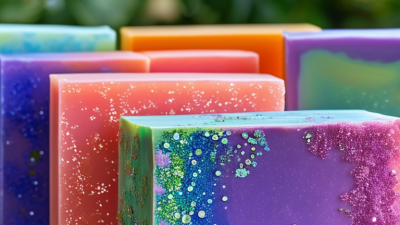
Gold mica powder is moving beyond decorative craft use. Its warm metallic glow suits cosmetics, coatings, plastics, printing inks, and artistic finishes. The Grand View Research pearlescent pigments report valued this market at approximately USD 1.5 billion in 2023, with steady growth expected through 2030. That expansion reflects demand for visual differentiation, especially in premium packaging and personal-care products.
In cosmetics, fine gold mica creates shimmer in eye products, highlighters, and body powders. Cosmetic-grade material requires controlled particle size, purity testing, and restricted heavy-metal levels. In coatings, mica improves sparkle while supporting layered effects on walls, metal parts, and furniture. Plastic processors use it in molded components, but heat stability and dispersion must be checked before production. Printing inks need consistent brightness, clean color, and reliable flow through screens or rollers.
Packaging is another practical application. A controlled gold effect can make labels resemble brushed metal under store lighting. The result depends on more than color. It also depends on film thickness and surface preparation. USGS mineral reports identify ground mica as an established ingredient in paint, plastics, rubber, and joint compounds. However, gold mica is not automatically suitable for every formula. Some powders settle quickly or look muddy after mixing. Supplier data should include particle distribution, moisture, bulk density, safety documentation, and batch records. That is where sourcing often becomes less glamorous. Testing a small sample remains wiser than trusting a beautiful photograph.
Gold mica powder is commonly used as a pearlescent pigment in cosmetics, decorative coatings, plastics, printing inks, and arts-and-crafts products. The ranges shown are typical starting formulation levels; actual dosage depends on particle size, color strength, binder system, and the desired visual effect.
A reliable supplier should show more than a bright sample. Ask for batch records, mineral origin, processing location, and production capacity. The USGS Mineral Commodity Summaries 2024 reports mica production by broad categories, not pigment grades. Therefore, large raw-tonnage claims do not prove cosmetic or coating expertise. Request recent certificates of analysis for particle size, moisture, iron content, and color consistency.
Check whether the supplier measures D50 and color difference under defined lighting. Gold mica powder can look different under daylight and warehouse lamps. Ask for ΔE data, sieve results, and gloss measurements. ISO 787 test methods can support checks for pigments, including moisture and water-soluble matter. A competent laboratory should explain its method, not only provide a stamped document. Small details matter.
Review three production batches, not one. Compare shade, sparkle, dispersion, and residue in your actual resin or coating. Request safety data sheets and heavy-metal test results that match your destination market. China Customs trade statistics often group mica products under wider classifications, so export volume can be misleading. Factory audits should verify equipment, dust control, storage, and complaint records. An imperfect point remains: even a strong supplier may show seasonal variation in mineral feedstock. Your evaluation should allow for this risk, rather than assuming every batch will be identical.
Global buyers need more than a bright gold appearance. They need stable quality, clear documentation, and repeatable batches. The ISO Survey 2022 recorded over 1.2 million ISO 9001 certificates worldwide, showing how widely quality systems are expected. For gold mica powder, suppliers should provide mesh-size results, color comparison records, moisture data, and a batch-specific Certificate of Analysis. Traceability matters. Each lot should connect to production and testing records.
Customization must follow the application. Industrial users may require controlled particle size and stronger heat resistance. Decorative users often prioritize sparkle, shade, and smooth dispersion. Cosmetic applications require additional safety assessments under destination-market rules. A supplier should confirm the target use before recommending a grade. Not every shade matches. Trial samples, retained references, and customer approval can reduce costly rework. Still, color can shift slightly between minerals and processing runs, so absolute uniformity should not be promised.
Packaging needs practical detail. Inner liners, sealed bags, moisture barriers, and rigid cartons help protect powder during handling. UNCTAD’s Review of Maritime Transport 2023 states that over 80% of global merchandise trade by volume moves by sea. Export preparation therefore needs careful palletizing, carton marks, commercial invoices, packing lists, and SDS files. Air shipment may suit urgent samples, while sea freight usually supports larger orders. Small errors matter. Export service should include pre-shipment photos, document checks, and realistic lead times, not optimistic promises.
Global buyers choose reliable Chinese gold mica powder suppliers because dependable sourcing begins with controlled mineral selection. Experienced suppliers inspect mica flakes for brightness, particle size, and unwanted dark inclusions. They explain which grades suit coatings, decorative inks, or craft materials. Technical guidance matters when a buyer needs a warm gold tone instead of a pale metallic effect. Practical knowledge comes from repeated production, not attractive catalog photos.
Reliability becomes visible in documents and repeat orders. A professional supplier provides a certificate of analysis, safety data sheet, particle-size information, moisture details, and batch references. Samples should arrive in sealed bags with clear lot numbers. Buyers can compare color under daylight, test dispersion in resin, and record viscosity changes. This process supports informed purchasing. However, one sample may not predict production perfectly. Humidity, mixing speed, and binder chemistry can change the final shimmer. Good suppliers admit this limitation and help adjust specifications.
Chinese manufacturing experience also supports flexible packaging and export coordination. Clear communication matters for 25-kilogram bags, pallets, or smaller trial shipments. Reliable teams confirm lead times, loading details, and replacement procedures in writing. Small mistakes still happen. A mislabeled carton or delayed update can disrupt production. Suppliers who investigate causes, share corrective actions, and preserve traceability earn long-term trust. That accountability matters more than a low quotation.
| Evaluation Dimension | Typical Commercial Specification | Why It Matters to Global Buyers | Recommended Verification |
|---|---|---|---|
| Base Mineral | Natural mica, commonly muscovite, coated or colored to create a gold appearance | The mineral base affects brightness, platelet structure, chemical resistance, and processing behavior | Request mineral identification, technical data sheet, and representative sample |
| Appearance | Gold, champagne gold, antique gold, or bronze-gold visual effect; shade depends on coating and particle size | Color consistency is essential for coatings, plastics, printing inks, cosmetics, and decorative materials | Approve a physical color standard under controlled lighting before mass production |
| Particle Size | Common grades range from fine pigment powders to larger effect-pigment platelets; the exact range is product-specific | Fine grades provide smoother coverage, while larger platelets generally produce stronger sparkle and reflectivity | Check laser diffraction or sieve data and compare the sample with the intended application |
| Mica Content | The percentage of mica and coating components varies by grade and intended use | Composition influences opacity, luster, density, dispersion, and compatibility with the formulation | Review the technical data sheet and request a batch-specific certificate of analysis |
| Moisture | Low moisture is normally preferred for stable storage and easier dispersion; the contractual limit should be product-specific | Excess moisture may cause clumping, inconsistent feeding, or formulation instability | Confirm the test method, acceptance limit, packaging condition, and batch result |
| Heavy-Metal Compliance | Limits depend on the destination market and end use, especially for cosmetics, toys, packaging, and consumer products | Regulatory compliance reduces import risk and supports customer safety requirements | Request an independent laboratory report covering lead, arsenic, mercury, cadmium, and other applicable elements |
| Dispersion Performance | Performance depends on platelet size, surface treatment, binder system, mixing energy, and addition sequence | Good dispersion supports uniform color, stable gloss, and fewer visible agglomerates | Conduct application testing in the buyer’s actual resin, coating, ink, or cosmetic base |
| Application Suitability | Used in decorative coatings, plastics, printing inks, crafts, construction finishes, and selected cosmetic formulations | A grade optimized for one application may not deliver the same performance in another | Match the grade with temperature, pH, solvent, shear, regulatory, and surface-finish requirements |
| Packaging | Common options include sealed inner bags placed in cartons, drums, or other moisture-protective export packaging | Suitable packaging helps protect powder flowability and appearance during international transport | Confirm net weight, pallet configuration, labeling, batch identification, and transport protection |
| Quality Documentation | A professional supply program should provide a technical data sheet, safety data sheet, specification, and certificate of analysis | Complete documentation supports customs clearance, internal approval, and customer audits | Check document consistency, revision dates, test methods, and traceability to the supplied batch |
| Export Readiness | International orders normally require export labeling, commercial documents, safety information, and agreed shipping terms | Clear export procedures help reduce delays, documentation errors, and unexpected logistics costs | Confirm Incoterms, lead time, freight method, customs classification, and required destination documents |
| Supply Reliability | Reliability should be assessed through sample consistency, production controls, batch traceability, and communication response | Stable supply is important for repeat production and reduces the need for frequent reformulation | Use a written specification, retained sample, inspection plan, and corrective-action process |
Note: Specifications for gold mica powder vary by mineral source, coating system, particle-size grade, and intended application. Buyers should confirm all values through the supplier’s current technical documents and independent testing where required.