Choosing the right mica powder for paint can be challenging. Experts emphasize the importance of quality in achieving stunning finishes. John Reynolds, a renowned expert in the mica powder industry, states, “The right mica powder can transform your paint projects.”
Mica powder is not just about color; it affects texture and sheen. It enhances the visual appeal of paints significantly. However, selecting the best mica powder for paint requires careful consideration of several factors. You must understand the particle size, color variations, and compatibility with your specific paint type.
Many are overwhelmed by the options. Some might purchase products without thorough research, only to discover they lack the desired effects. This leads to wasted time and resources. A thoughtful approach can prevent such missteps. Understanding the unique qualities of each mica powder is essential. It is a journey worth undertaking for any serious painter.

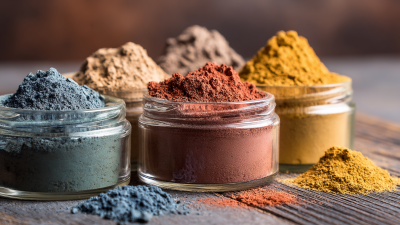
Mica powder plays a crucial role in the paint industry. It is used to add shimmer, depth, and a variety of colors to paints. Understanding mica powder starts with recognizing its natural origins. Mica is a mineral that can be ground into a fine powder. This powder reflects light and creates a beautiful luminescent effect.
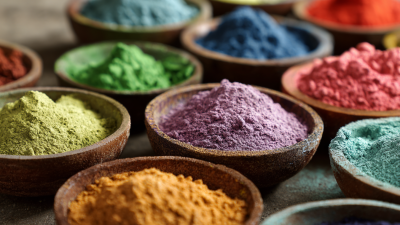
When choosing mica powder for paint, consider factors like color intensity and particle size. Finer particles create a smoother finish, while larger ones might give a textured look. The color choice can greatly influence the final appearance of your paint. Some colors can even appear different when mixed or applied. Experimenting with various shades can lead to unexpected but delightful results.
Working with mica powder can also present challenges. The uneven distribution in mixtures can affect the paint quality. Obtaining consistency may require practice and patience. Remember to test sample mixes before committing to larger batches. Understanding how mica interacts with other materials in your paint can help improve your outcomes and refine your techniques.
| Mica Powder Color | Particle Size (Microns) | Transparency | Best Use Cases |
|---|---|---|---|
| Light Gold | 10-15 | Semi-Transparent | Acrylic Paints, Canvas |
| Pearl White | 5-10 | Opaque | Oil Paints, Decorative Finishes |
| Titanium Black | 15-20 | Opaque | Ceramics, Epoxy Coatings |
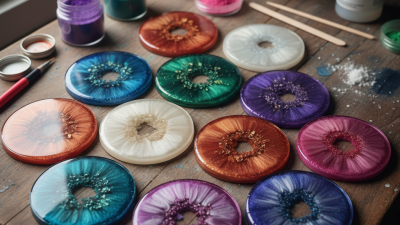
| Violet | 10-15 | Semi-Transparent | Resin Art, Crafts |
| Red | 15-25 | Transparent | Jewelry, Makeup |
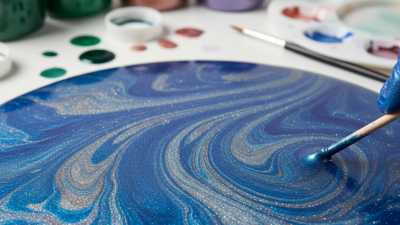
When selecting mica powder for paint, several key factors come into play. The color and shade of the mica powder should match your project's requirements. Different colors can impact the final appearance significantly. Testing samples often reveals surprises. The particle size matters too. Finer particles provide a shimmering effect, while larger ones offer a different texture.
Another crucial aspect is the source of the mica powder. Quality varies widely based on origin. Reliable suppliers will provide information on sourcing practices. Always check for impurities; they can affect the paint's performance. Transparency about production processes builds trust.
Finally, consider how you'll use the mica powder. Different applications demand specific types. For instance, exterior vs. interior applications may require different formulations. Reflect on your project's needs. The right choice often comes down to trial and error. Experimentation can lead to surprising outcomes, so don't be afraid to adjust your approach as you work.
When selecting mica powder for paint applications, understanding the types available is crucial. Mica powders come in various forms, with each type offering unique properties suitable for specific uses. For instance, cosmetic-grade mica is finely milled and ideal for adding shimmer to paints. Industrial-grade mica, on the other hand, is less refined and often used in protective coatings due to its durability.
Tips: Always check the particle size. Smaller particles provide a smoother finish, while larger ones offer a textured look.
Mica powders can also be categorized by color. Natural mica is often earthy, while synthetic mica offers a broader color palette. According to industry reports, synthetic mica demand is on the rise, expected to grow by 5% annually through 2028. This shift reflects a preference for consistency and vibrant pigments in artistic paints.
Tips: Consider the application method as well. Mica powders blend differently depending on whether you're using them in water-based or oil-based paints. Adjustments may be needed for optimal mixing.
When selecting mica powder for painting, quality and purity are crucial. Mica is a natural mineral. It comes in various grades, often affecting the final artwork. Look for powders that are finely milled. Coarse particles can lead to uneven textures in your paint.
Purity is equally essential. Impurities can alter the color and finish of your paint. Check for additives and fillers on the label. Pure mica powder should be devoid of contaminants. Using contaminated mica might compromise your project's longevity.
Experience speaks volumes when evaluating suppliers. Seek out those who provide detailed product descriptions. Authentic reviews from artists can guide your choice. Always test a small batch before committing. Sometimes, what seems perfect in theory can disappoint in practice. Take the time to experiment with different samples. This ensures that you find the perfect mica powder for your artistic vision.
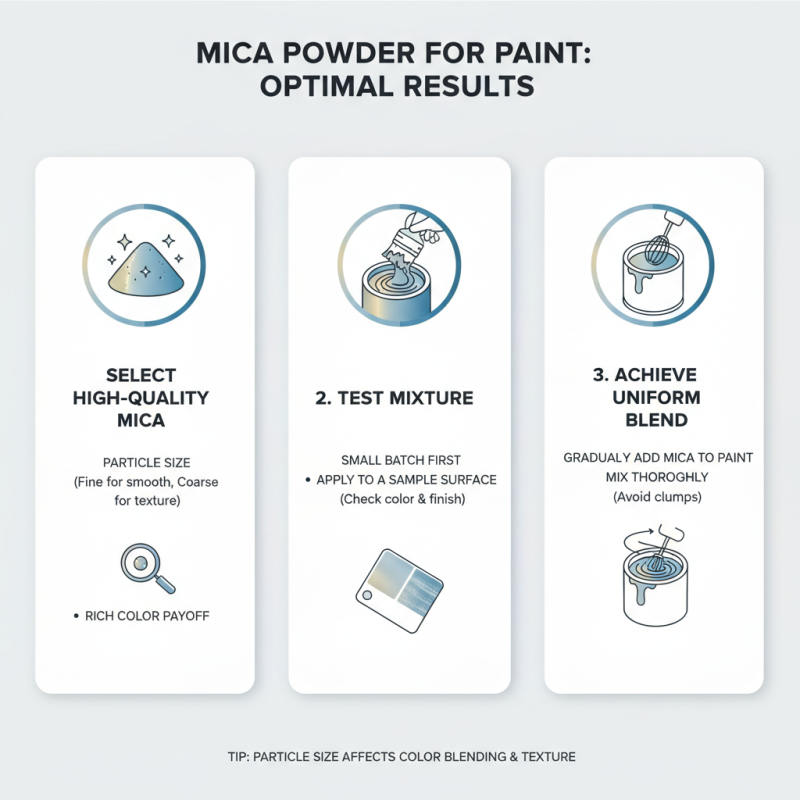
When mixing mica powder for paint, it’s essential to achieve optimal results. Begin by selecting a high-quality mica powder, ensuring that it has the desired particle size and color. A recent industry report highlighted that particle size affects how colors blend in paint significantly. Using fine mica can create smoother finishes, while coarser particles yield more texture.
Testing the mica powder is crucial. Mix a small sample with your paint medium to evaluate the color and sheen. Observation is key—some mica powders may not perform as expected when combined with various binders. A study from the Paint Research Association found that around 30% of artists encountered issues with inconsistent results when improperly mixing mica. Adjusting ratios can help; an ideal starting point is typically 1:5 (mica to paint).
The process doesn’t stop at mixing. It involves thorough testing on different surfaces. Some mica powders can behave differently when dry. A lack of adhesion can lead to peeling or flaking. Understanding these nuances can prevent dissatisfaction with the finished work. Always document your mixing ratios and results to refine your approach over time.